The price of a barrel of oil surged to $115, reflecting escalating tensions in the Middle East and significant disruptions in global energy supply. Meanwhile, S&P 500 futures remained flat after the index closed down 1.36% in the previous session, marking a decline of 3.23% year-to-date. Major markets in Asia and Europe faced sharp declines, with Japan’s Nikkei 225 dropping 3.38% and China’s CSI 300 faring somewhat better by decreasing 1.61%. European traders expressed concern as indexes approached losses nearing 2% by midday.
The market’s resilience amid such an energy crisis has sparked debate, with analysts questioning why oil prices aren’t even higher. In a recent development, the White House has suspended the Jones Act for 60 days, which analysts predict could lead to a 3-cent reduction in gas prices.
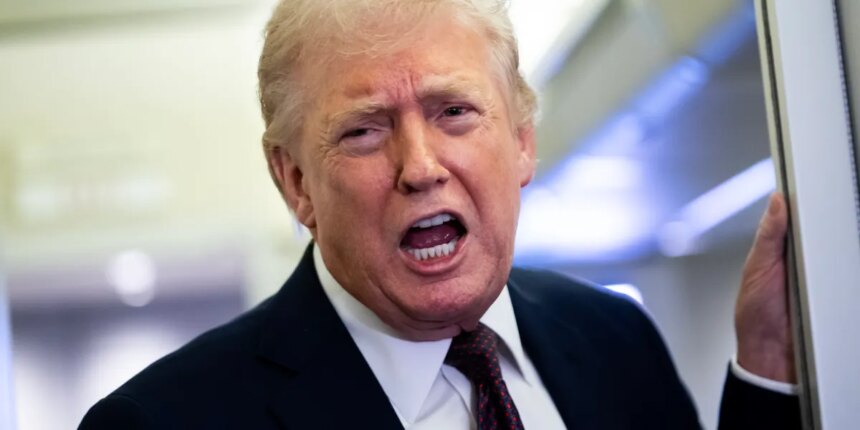
Tensions intensified as an attack on the world’s largest gas field in Qatar and an Israeli strike on Iran’s South Pars gas field escalated hostilities. Iran’s military action included targeting the Ras Laffan facility, which is crucial to global liquefied natural gas supply. In a striking response, Israel also attacked Iran’s South Pars field, leading to an explosive rise in gas prices on European markets, which soared by 30%. President Trump, in a social media post, expressed his fury at the situation, emphasizing that the U.S. had no prior knowledge of the Israeli strike.
Simultaneously, Iran targeted Saudi Arabia’s Yanbu refinery and drone strikes hit Kuwait’s Mina Al-Ahmandi oil facility, further complicating the energy landscape in the region. The UAE’s Habshan gas facility was temporarily shut down due to debris from missile interceptions, illustrating the increased risks associated with these attacks. In the U.S., the price of gasoline now frequently exceeds $4 per gallon.
In a bid to de-escalate tensions, Trump issued statements attempting to clarify the U.S. stance, asserting that Qatar had no involvement in the attacks and indicating a reluctance to authorize further violence except in self-defense. This positioning highlights a growing rift in strategy between the U.S. and Israel.
Adding to the complexity, reports indicate the U.S. is preparing to deploy 2,200 Marines from the amphibious assault ship U.S.S. Tripoli to the Middle East, signaling a sustained military presence. Speculation mounts that a primary objective could be securing Kharg Island, Iran’s major oil export terminal, which could further prolong the conflict.
Iran, meanwhile, has denied claims of engaging in backchannel discussions with the U.S., asserting that such narratives are fabricated to manipulate oil prices. With an estimated 180,000 members committed to their military, Iranian forces appear determined to resist pressure, complicating prospects for resolution. Analysts believe that while a withdrawal of U.S. troops might lead Iran to de-escalate, such a move would bolster the regime’s position and allow it to control critical maritime routes.
Across the globe, as diplomatic efforts falter, tensions with China have surfaced. Trump’s decision to cancel a pivotal summit with Xi Jinping demonstrates a strategic pivot towards managing the Iranian crisis, which has prompted commentary on perceived U.S. weaknesses in the international arena.
On another front, the technology sector continues to navigate its own challenges. Companies like Micron are witnessing a remarkable growth surge, with sales tripling year-on-year due to unprecedented demand for memory chips in artificial intelligence applications. The ongoing construction boom in AI data centers has contributed significantly to this demand, pushing Micron’s capital expenditures to anticipated levels over $25 billion for the year. However, concerns about the power grid’s capacity to support this growth add to the uncertainty facing the tech industry, as industry analysts warn that the infrastructural demands of AI may soon outpace available resources.
The market today reflects a complex tapestry of geopolitical strife, energy challenges, and technological evolution, revealing an interconnected world grappling with multiple crises and ongoing change.