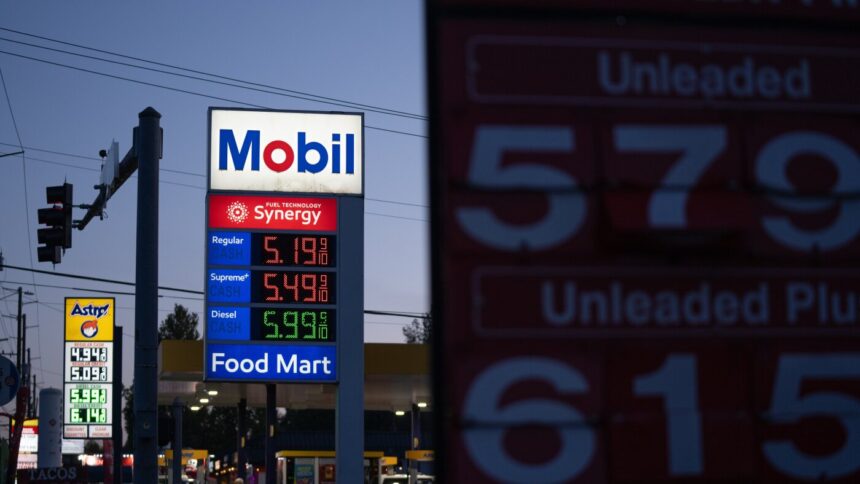
Gasoline prices in the United States have surged more than 30 cents per gallon over the past week, driven by the ongoing closure of the Strait of Hormuz amid the Iran conflict. As of Sunday, the average cost for regular gasoline stood at $4.446, a notable increase from $4.099 just a week prior. This sharp rise contrasts starkly with prices just before the onset of the Iran war when the average was approximately $2.98 on February 26. Last year, gas prices were significantly lower, averaging $3.171, according to data released by AAA.
This surge in gas prices marks the highest level seen since late July 2022, according to the automotive group. In light of these developments, former President Trump claimed that once hostilities conclude, gas prices are expected to “drop like a rock.” However, analysts caution that even after the reopening of the Strait, prices may remain elevated for an extended period.
Kevin Book, co-founder of ClearView Energy Partners, remarked that prolonged closures of vital oil transport routes, such as the Strait of Hormuz, could further escalate gas prices. “When inventories are low and you can’t get oil out of the ground or out of the strait, you should expect prices to keep rising at least until demand capitulates and starts to contract,” Book stated during an interview. He also noted that the timeline for consumers to see a return to normal prices may extend over several weeks or even months, depending on the duration of the strait’s closure and subsequent repair efforts.
The impact of these rising prices is affecting everyday Americans, particularly as the U.S. dollar has seen depreciation of around 10% from early January 2025 to late April 2026. This decline represents the largest loss in value for the dollar since 1973, according to Morgan Stanley analysts. A weaker dollar complicates international travel and increases the cost of imported goods, although it may benefit American exporters.
In an attempt to alleviate the pressure of soaring fuel prices, the Department of Energy has released 17.5 million barrels of crude oil from the U.S. Strategic Petroleum Reserve between March 20 and April 24. Meanwhile, the OPEC+ group announced plans to increase production by 188,000 barrels per day starting in June to stabilize the market.
As consumers navigate these inflated prices, there is a growing concern regarding their financial impact—especially amidst a general decline in the dollar’s value. The situation remains precarious as the world watches developments regarding the Iran war and potential resolutions that might stabilize both geopolitical situations and market conditions.