A recent analysis has revealed that over half of California’s congressional lawmakers possess a median net worth exceeding $1 million, with investments in the stock market significantly contributing to their wealth. The report, conducted by NOTUS based on lawmakers’ financial disclosures, highlights the financial landscape of these politicians.
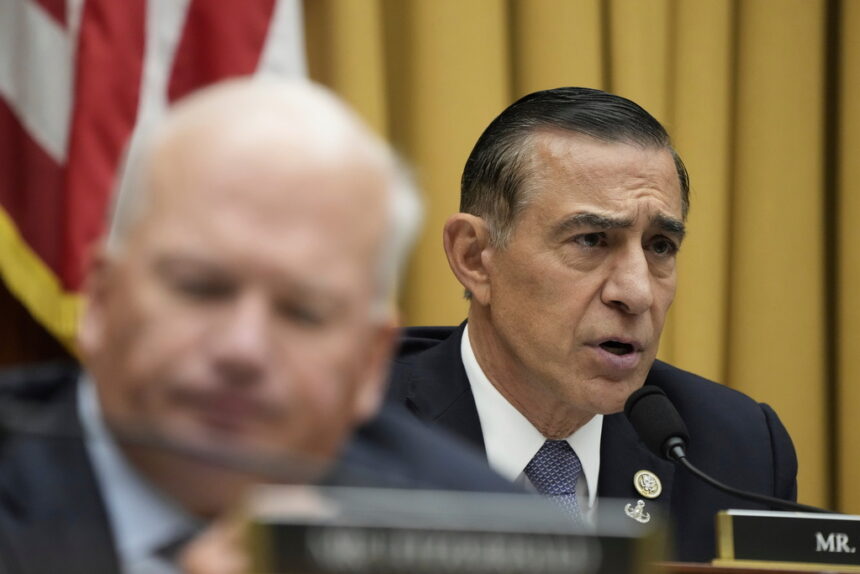
Among the wealthiest is Rep. Darrell Issa, who boasts a staggering median net worth of $282.4 million. Having served California since 2001, aside from a brief hiatus, Issa amassed his fortune primarily through the car alarm industry. He is set to retire this year, leaving behind a portfolio that includes numerous rental properties and substantial investment accounts.
Equally notable is Rep. Ro Khanna, whose family engaged in a remarkable 4,284 stock trades in 2025, amounting to over $59 million. Their portfolio includes diverse investments, ranging from healthcare giants like Humana and Eli Lilly to retail leaders such as Lululemon. Khanna himself has a median net worth of $232.7 million.
Rep. Gilbert Cisneros also stands out in the realm of stock trading. After winning a Mega Millions jackpot of $266 million in 2010, Cisneros has invested significantly in defense companies like Boeing, raising concerns about potential conflicts of interest, given his position on the House Armed Services Committee. His office clarified that day-to-day trading is outsourced to a financial adviser, not managed personally by the congressman or his spouse. His median net worth is documented at $65.9 million.
Additionally, former House Speaker Nancy Pelosi commands attention with a median net worth estimated at $187.7 million, largely attributed to her husband Paul Pelosi’s investments. Her latest disclosure notes shares in major corporations, including tech firms like Alphabet and Apple. Despite her previous opposition to stock trading bans, Pelosi has recently endorsed the notion.
While some lawmakers, including Khanna, support restrictions on stock trading for Congress members, others, like Issa and Cisneros, have not publicly expressed support for such legislation. An ongoing congressional debate reflects a growing momentum toward banning lawmakers from stock ownership altogether, a move gaining traction among both sides of the aisle and from the White House. Currently, no regulations prohibit lawmakers from trading stocks in sectors under their oversight, raising ethical concerns.
Research from students at UC San Diego underscores the potential damage congressional stock trading poses to public trust and legislative integrity. Raihan Alam emphasized that such practices can compromise the perceived legitimacy of Congress, suggesting that mistrust in institutions could erode the foundations of American democracy.
In addition to stock investments, some lawmakers generate income from rental properties. For instance, Rep. Judy Chu reported earnings from multiple rental properties in Santa Clara. Agricultural lawmakers, such as Reps. Jim Costa and Vince Fong, benefit from family farming operations.
Interestingly, not all California representatives are millionaires. Senator Alex Padilla’s financial disclosures reveal liabilities that surpass his assets, while Senator Adam Schiff’s median net worth stands at $1.3 million, primarily derived from Apple stocks and mutual funds.
As California’s delegation welcomes new members, the trend of wealth among lawmakers appears prominent. In the latest Congress, four of the nine new members already demonstrated millionaire status, including George Whitesides, a former executive at Virgin Galactic. After taking office, Whitesides sold off his individual stock holdings to preemptively address potential conflicts of interest.
In stark contrast to the affluence of California lawmakers, the state’s median household net worth is approximately $288,000, according to the Public Policy Institute of California. This discrepancy underscores the financial divide between elected officials and their constituents, raising questions about representation and economic disparity in the political landscape.