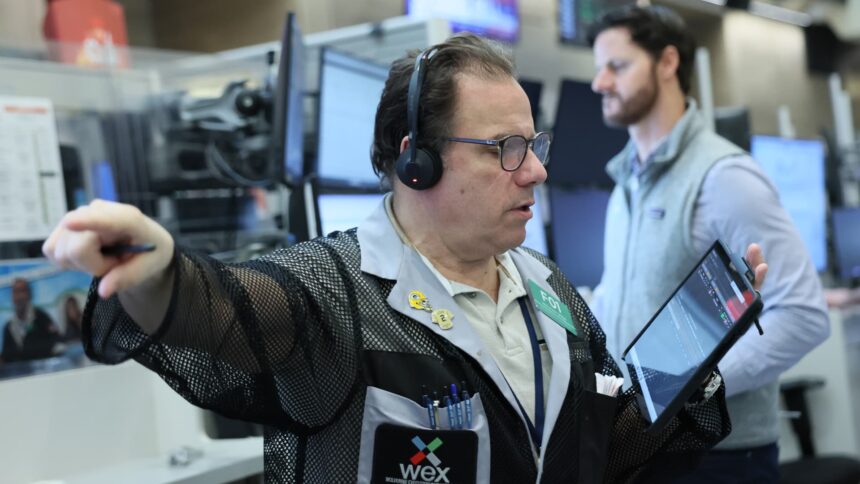
Traders observed a quiet start to the week as stock futures reflected a cautious sentiment driven by ongoing geopolitical tensions involving the U.S. and Iran. The latest warnings issued by the U.S. government against Iran loomed large over the financial markets, contributing to a lack of significant movement in major stock futures.
The Dow Jones Industrial Average futures were nearly flat, signaling uncertainty among investors. Meanwhile, S&P 500 futures dipped by 0.1%, while Nasdaq-100 futures experienced a slightly larger decline of 0.2%. This conservative posture in the stock market followed a streak of four consecutive weeks of losses across major benchmarks, marking a notable downturn.
The backdrop of these market movements is a conflict that has escalated into its fourth week. President Donald Trump recently issued grave warnings against Iran, threatening retaliatory actions against Iranian power plants if the strategic Strait of Hormuz, vital for global oil transport, remains closed. In response, Iran retaliated with threats to target U.S. infrastructure, particularly energy and desalination facilities located in the Gulf region, should the U.S. follow through on its provocations.
As tensions heightened, crude oil prices responded promptly. West Texas Intermediate futures rose by 0.5%, trading at $98.73 per barrel, while the international benchmark, Brent crude, also gained 0.5%, reaching $112.76 per barrel. Commenting on the situation, Ben Emons, Chief Investment Officer and founder of Fed Watch Advisors, stated, “Clearly, Iran is not backing down. The risk-off sentiment could worsen substantially this week, with the first visible macro effects in a deluge of global PMI data.”
Investors are closely monitoring upcoming economic indicators, particularly the S&P Global Flash U.S. PMI report set for release on Tuesday morning. Market participants are also vigilant about crucial support levels after the S&P 500 last week broke below its 200-day moving average for the first time since May.
The week prior proved challenging for major indices. Both the Dow and Nasdaq fell around 2% each, while the S&P 500 suffered a loss of 1.5%. This downturn for the Dow marked its first four-week losing streak since 2023, raising concerns about the sustainability of the rally that began earlier in the year. With the turbulent geopolitical landscape and upcoming economic data, traders remain cautious as they navigate the current market conditions.