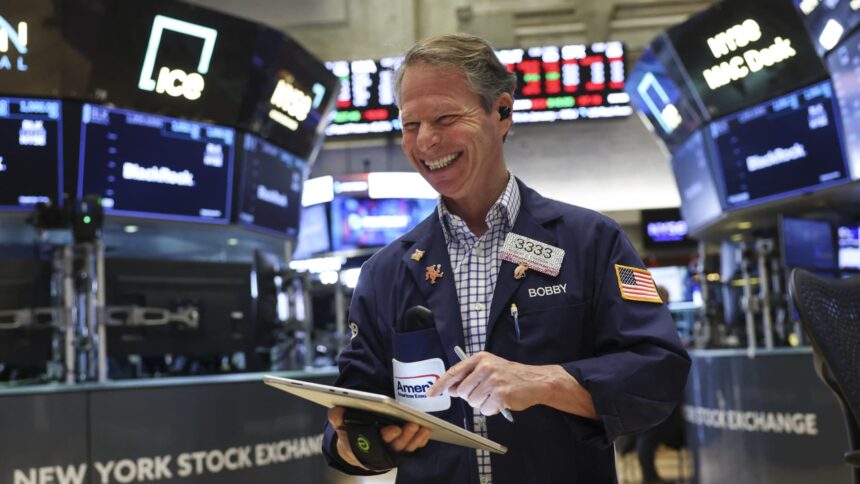
Stocks have shown impressive momentum this past week, with the S&P 500 and Nasdaq both marking record highs as they closed the week, buoyed by robust earnings reports and a strong, yet measured, jobs report. Investors are particularly optimistic about the potential for an end to hostilities in the Middle East, which has been a pivotal concern since February due to the ongoing conflict in Iran.
Media coverage highlighted that the U.S. and Iran were reportedly nearing a memorandum of understanding to resolve the conflict. However, tensions flared when both nations exchanged fire in the critical Strait of Hormuz, a vital artery for global oil transport. On Friday morning, Secretary of State Marco Rubio indicated that updates on the peace proposal could be forthcoming, yet no developments were confirmed by Saturday afternoon. This ongoing conflict is also expected to be a key topic of discussion at the upcoming summit in Beijing between President Donald Trump and Chinese President Xi Jinping.
For the week, the S&P 500 surged by 2.3%, while the Nasdaq climbed an impressive 4.5%. Both indexes extended their winning streaks for six consecutive weeks, the longest since 2024. A decline in oil prices and bond yields contributed to this upward trend, leaving market analysts pondering the sustainability of the rally as they look to the next week.
One significant factor affecting market dynamics is the Federal Reserve’s upcoming interest rate decisions. Mixed economic reports released on Friday added complexity to this situation. Although the April jobs report revealed an increase in nonfarm payrolls by 115,000—significantly higher than the anticipated 55,000—it fell short of March’s strong performance of 185,000. The unemployment rate held steady at 4.3%, reinforcing the labor market’s resilience and complicating arguments for a near-term rate cut. Jerome Powell’s term as Fed chairman is set to expire on May 15, increasing pressure on President Trump’s nomination of Kevin Warsh for the role and the Senate’s confirmation process.
In the tech sector, quarterly earnings from cybersecurity firms spurred investor enthusiasm, benefiting stocks like CrowdStrike and Palo Alto Networks, which rose approximately 16% and 15%, respectively. A strong performance from Fortinet, a competing firewall provider, significantly lifted its full-year guidance and was interpreted as a positive signal for the overall cybersecurity market.
The week also saw notable gains in Corning’s stock, which spiked by 18% following the announcement of a lucrative supply deal with Nvidia, which also posted a solid 8.4% increase in share price. Corning projected an ambitious $20 billion annualized sales target by 2026 and announced plans to open three new manufacturing plants in the U.S. to bolster production of optical fiber technologies, driven by rising demand for AI infrastructure.
Nvidia CEO Jensen Huang termed this period as “the single largest infrastructure buildout in human history,” emphasizing the importance of such partnerships to meet surging technological demands. During an interview on “Mad Money,” Corning’s CEO, Wendell Weeks, predicted that new deals with unnamed hyperscalers could surpass the substantial $6 billion agreement with Meta Platforms, showcasing the expanding market potential.
As the market anticipates the next moves from Federal Reserve officials and global political developments, the successes in technology and cybersecurity illustrate the evolving landscape of investor sentiment and market competition.