Asian markets showed a mixed response on Tuesday amid fluctuations in oil prices, driven by ongoing tensions in the Middle East. After a significant drop in oil values on Monday, Brent crude futures for May climbed over 3.5% to reach $103.70 per barrel, while West Texas Intermediate futures rose 4% to $91.72 per barrel. This rebound comes on the heels of Brent’s nearly 11% decline on Monday, when prices fell to approximately $99 from a recent high of over $112.
José Torres, a senior economist at Interactive Brokers, highlighted that the market remains cautious regarding the potential for an extended conflict in the region. He emphasized that despite positive trends on Wall Street, oil prices are still far from their previous lows. The volatility was exacerbated by conflicting reports regarding negotiations between Tehran and Washington, with Iran denying any discussions took place.
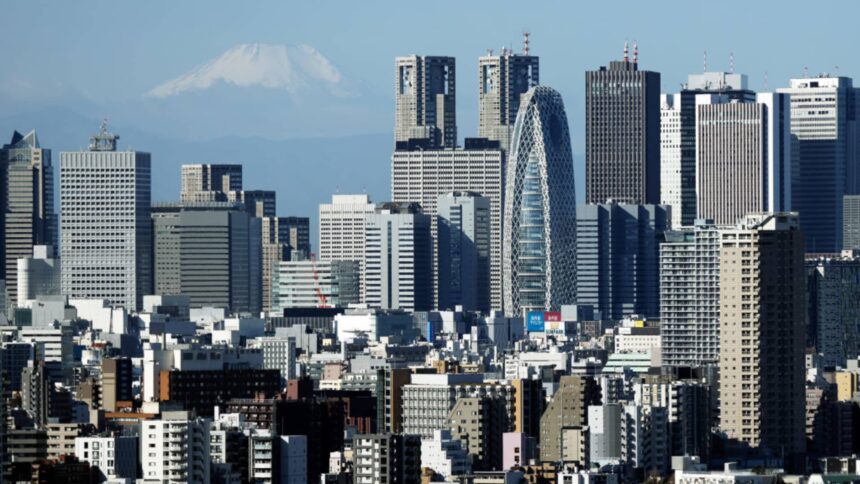
In Asia, South Korea’s Kospi index initially surged more than 3% before settling into a 1.5% gain, while the small-cap Kosdaq index was up 1.7%. Japan’s Nikkei 225 experienced a rise of 1.1%, and the Topix index increased by 1.87%, buoyed by a decrease in Japan’s headline inflation rate for the fourth consecutive month. Recent data from Japan’s Statistics Bureau indicated that the consumer price index dipped to 1.3% in February, the lowest rate since March 2022, signaling a cooling economy driven by stabilizing food prices and government fuel subsidies. This figure now falls below the Bank of Japan’s 2% inflation target, decreasing from 1.5% in January.
Australia’s S&P/ASX 200 index edged up by 0.32%. In Hong Kong, the Hang Seng index rose 1.62%, while the CSI 300 index in mainland China gained 0.52%.
The market dynamics also shifted following comments from U.S. President Donald Trump, who indicated that he had directed the U.S. military to postpone planned attacks on Iranian infrastructure for five days, claiming productive discussions had taken place with Iranian representatives. However, Iranian state media refuted Trump’s statements, asserting that no negotiations occurred.
In his social media update, Trump expressed optimism about achieving a resolution to hostilities in the Middle East, stating he had “very good and productive conversations” regarding the conflicts in the region. This proclamation led to a rally in U.S. markets, with the Dow Jones Industrial Average rising by 631 points, or 1.38%, to close at 46,208.47. The S&P 500 and the Nasdaq Composite also saw gains of 1.15% and 1.38%, respectively.
As the global financial landscape adapts to these developments, the uncertainty surrounding the Middle East conflict and rising oil prices continues to loom over market sentiments. In related commodity markets, spot gold experienced a decline of about 1.5%, settling at $4,340.18, while silver prices fell nearly 3%.