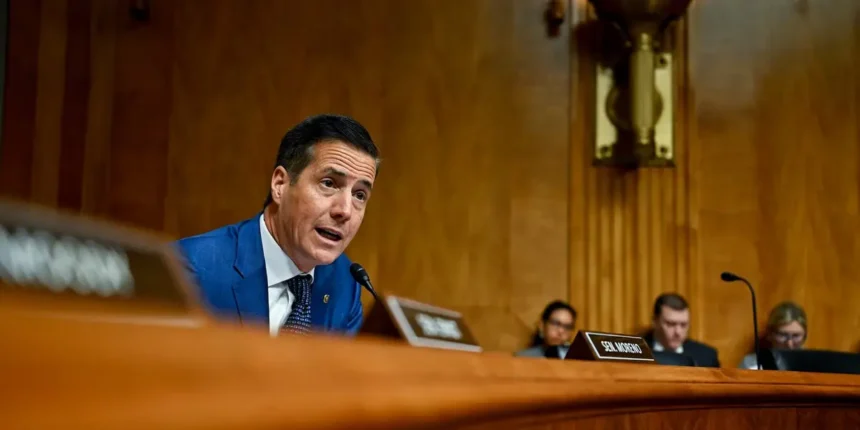
Lawmakers have recently taken a definitive stance regarding prediction markets, moving swiftly to prohibit their use among senators and staff following a unanimous resolution passed in the Senate. This decision raises pressing questions, particularly as efforts to implement a similar ban on stock trading have repeatedly faltered. Notable voices, such as Republican Rep. Nancy Mace from South Carolina, have publicly urged for a simultaneous ban on stock trading, asking, “Why is this so hard?”
The swift passage of the prediction market ban highlights the challenges lawmakers face in regulating their own financial activities. Notably, there is growing momentum for similar restrictions beyond the Senate, with discussions of a potential House resolution already underway. Additionally, the White House has issued warnings to staff members to avoid participation in prediction markets, indicating a widespread concern regarding the ethical implications of such trading platforms.
The disparity between the prohibition of prediction markets and the continued allowance of stock trading can be attributed to several key factors. Firstly, there is a perception that few lawmakers engage in prediction markets, making the ban a seemingly straightforward decision. Although specific data is lacking—as current ethics regulations do not mandate public disclosure of event contract purchases—evidence suggests that participation among lawmakers is minimal. For instance, while predictive markets are a relatively recent phenomenon, emerging mainly in 2024, platforms like Kalshi have proactively barred members of Congress from creating accounts, further limiting potential involvement.
In contrast, stock market investments have long been a standard method for individuals to grow their wealth, demonstrating considerable and sustained popularity among lawmakers. Reports indicate that nearly half of all members of Congress own individual stocks, with a significant majority invested in widely held funds such as mutual funds or ETFs. This contrasts sharply with the scant number of lawmakers who have reported substantial cryptocurrency holdings, underscoring a preference for more traditional investment avenues.
One reason lawmakers might be hesitant to adopt an outright ban on stock trading is the complexity involved. Stocks often represent long-term investments, with many lawmakers holding onto them for years, particularly through retirement accounts. Proposals to ban trading have frequently included provisions that would allow Congress members to retain their investments, either through blind trusts or via continued involvement in broader investment funds. This contrasts sharply with the nature of prediction markets, which typically involve short-term bets on events, leading to more active trading rather than passive investment.
Moreover, the risks associated with insider trading are perceived as significantly higher in prediction markets. These platforms allow speculation on a range of government actions, from the timing of potential shutdowns to election outcomes, creating a scenario where lawmakers might leverage their access to non-public information. Although stock trading presents its own set of insider trading risks, they tend to arise in a less direct manner, making it more complex to prove wrongdoing. For instance, incidents related to stock movements during President Trump’s tariff announcements highlighted the challenges in linking trades to actual insider knowledge of upcoming events.
In summary, while the ban on prediction markets demonstrates a willingness among lawmakers to regulate their financial activities, the complexities surrounding stock ownership and the perceived lower risks associated with it complicate the journey toward comprehensive reform. The conversation around these issues continues in Congress, as advocates push for reforms that ensure transparency and accountability in all forms of financial trading by public officials.