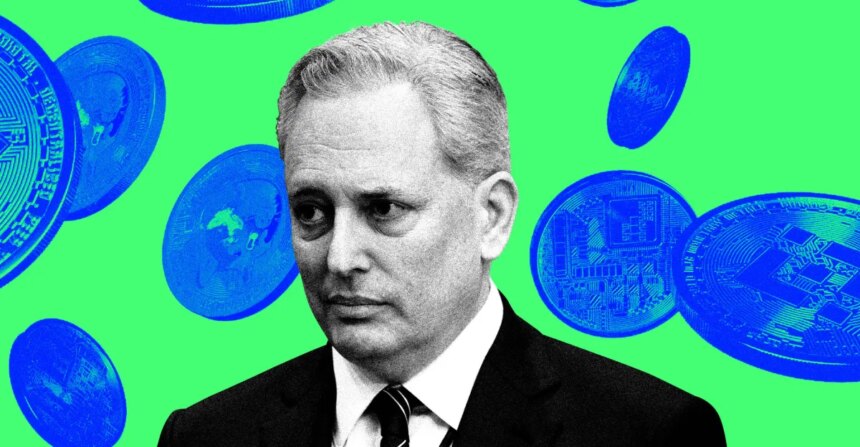
David Sacks, the prominent venture capitalist and tech billionaire, announced on Thursday that he is stepping down from his role as a special government employee and, in turn, will no longer serve as President Donald Trump’s Special Advisor on AI and Crypto. This shift in his status comes after questions arose regarding his extended tenure beyond the allowed 130 days for serving in such a dual capacity.
In a discussion on Bloomberg Television regarding a newly proposed legislative framework for artificial intelligence from the White House, Sacks explained that he had exhausted his time as a special government employee. He indicated that he will now prioritize his responsibilities as co-chair of the President’s Council of Advisors on Science and Technology (PCAST).
The White House recently announced several new appointments to the advisory council, including well-known tech figures like Mark Zuckerberg, Marc Andreessen, Jensen Huang, and Sergey Brin. In addition, Michael Kratsios, the head of the Office of Science and Technology Policy, will also serve as co-chair alongside Sacks.
Sacks expressed optimism about his new role, noting that being part of PCAST will enable him to provide recommendations on a broader array of technology issues beyond just AI. He clarified that his involvement would focus on advising the President and the White House, rather than coordinating directly with federal agencies. “It’s intended to be advice to the president and to the White House, to the executive offices of the president,” he explained, emphasizing the council’s goal of conducting studies and making informed recommendations.
During his time as the AI and crypto czar, Sacks had significant access to the Oval Office and played a crucial role in influencing the Trump administration’s technology policy. However, his aggressive approach led to several contentious political confrontations. Notably, his attempts to impose a blanket ban on state-level AI laws sparked backlash from Republican governors and disenfranchised some populist supporters. Critics, including Michael Toscano of the conservative Institute for Family Studies, have characterized Sacks’ influence as detrimental to the White House’s political standing, arguing he hindered potential policy achievements and contributed to a cultural divide with the administration’s base.
As Sacks transitions into his new role, the impact of his previous policy initiatives on the Trump administration’s political landscape will likely continue to be a point of discussion and analysis among political and tech circles alike.