Cryptocurrency stocks experienced significant losses on Friday as a downturn in U.S. equities negatively affected high-risk assets, with Bitcoin trading below $66,000 at approximately $65,830.92. Major players in the crypto market faced steep declines, including Coinbase and Galaxy, both of which saw their stock prices drop by nearly 7%. The exchange Gemini suffered an even larger loss, falling nearly 9%. Meanwhile, Robinhood, a crypto-friendly broker, saw its shares decline by nearly 6%, despite efforts to enhance its stock buyback program, which failed to curb the downward trend.
As the sell-off continued, Bitcoin-linked companies also experienced declines, with firms like MicroStrategy and Twenty One Capital falling approximately 6%. Ethereum-related entities, including Bitmine Immersion and Sharplink Gaming, posted losses of around 5%.
Cryptocurrency miners, often viewed as leveraged bets on both Bitcoin and artificial intelligence infrastructure, also extended their downturns. Riot Platforms, CleanSpark, IREN, HIVE Digital, and Hut 8 recorded losses ranging from 5% to 8%. Even companies like Marathon Digital (MARA) and Bitdeer, which had shown resilience earlier in the week, retraced their gains and were down 6% and 8%, respectively.
The backdrop for this sell-off includes increasing concerns regarding inflation pressures driven by rising oil prices amid signs of a weakening labor market. Richmond Fed President Tom Barkin indicated that escalating gas prices could reduce consumer spending while noting that hiring conditions appear “fragile.” Concurrently, Philadelphia Fed President Anna Paulson highlighted the potential risks to inflation and growth stemming from geopolitical tensions, particularly the conflict in Iran.
In the bond market, the 10-year Treasury yield, which had surged to nearly 4.5%, stabilized after comments from central bankers, while the two-year yield dropped to 3.91%. This shift in yields reflects a changing sentiment among investors, moving from expectations of interest rate cuts to considerations regarding possible rate hikes as inflation persists.
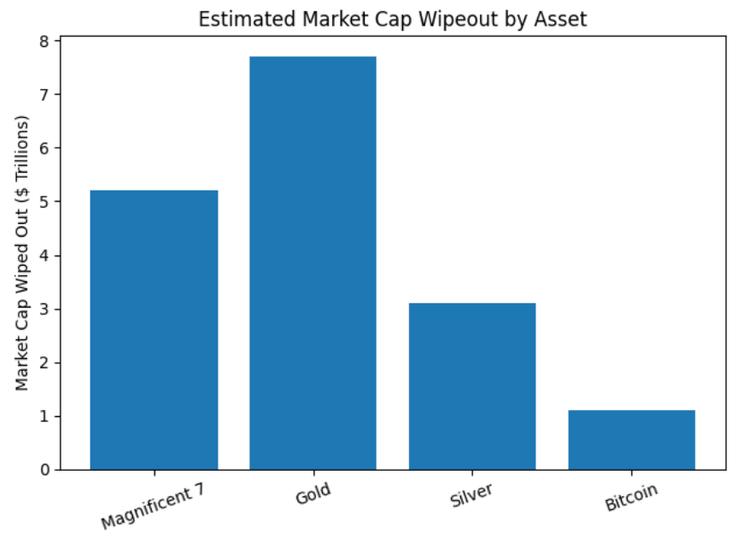
The market downturn has been extensive, with roughly $17 trillion in market capitalization lost from peak levels of the top seven technology stocks, often referred to as the “Magnificent Seven.” Bitcoin, having peaked at $126,000 in early October, is now down about 45%. Additionally, silver and gold have also seen steep declines of 45% and roughly 20%, respectively, while the Magnificent Seven stocks have all registered double-digit drawdowns from their highs.
The tech-heavy Nasdaq 100 index has also entered correction territory, trading over 10% below its all-time high from January, while the S&P 500 is approaching correction levels, currently down approximately 8.5%. The bond markets have experienced their challenges as well, with the iShares 20+ Year Treasury Bond ETF down about 0.3% on Friday and 5% over the past month due to rising yields.
This week has followed a predictable pattern seen since the onset of the conflict in the Middle East, characterized by gains on Monday—averaging around 3%—driven by relief that a major market crash did not occur. However, steady profit-taking has become common as the week progresses, particularly as optimism regarding geopolitical issues wanes. By Thursday and Friday, performance tends to deteriorate further as investors adopt a risk-off approach ahead of the weekend amid persistent uncertainties.