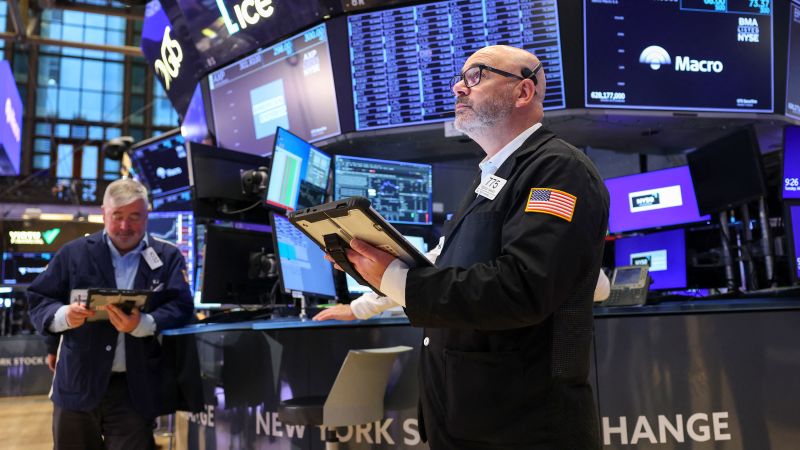
US stock markets experienced a sharp decline on Friday, with the Dow Jones Industrial Average officially closing in correction territory as investors grappled with ongoing uncertainty regarding the situation in Iran and rising energy prices.
The Dow closed down 793 points, or 1.73%, finishing the day at 45,167—marking a significant 10% drop from its peak above 50,000 recorded in February. This decline pushed both the S&P 500 and Nasdaq indices to their lowest levels since August, with the S&P 500 down by 1.67% and the Nasdaq suffering a 2.15% decrease.
Adding to the prevailing market angst, the Nasdaq extended its downturn from the previous day, now more than 12.5% off its record high achieved in October. This index, heavily weighted with technology stocks, is particularly sensitive to shifts in interest rates and economic growth prospects.
Over the last two days, the S&P 500 has seen a drop of 3.4%, representing its sharpest two-day decline since April, a period marked by heightened concerns over tariffs. Currently, the index stands 8.74% lower than its peak in late January and teeters on the edge of entering correction territory.
A key factor influencing market sentiment has been the rising cost of oil, which reached its highest price point since the onset of the conflict in the Middle East. Oil prices surged as doubts grew over ongoing efforts to negotiate peace. Brent crude, the international standard, saw a 4.22% increase, closing at $112.57 per barrel, while US crude oil rose by 5.46%, settling at $99.64 per barrel after briefly surpassing the $100 mark.
This heightened volatility was underscored by remarks from Doug Beath, global equity strategist at Wells Fargo Investment Institute, who indicated that “the diplomatic dissonance this week between the US and Iran dismayed investors.”
In the bond market, Treasury yields experienced an uptick, with the 10-year yield reaching 4.48%, the highest since July, before stabilizing around 4.43%. The 30-year yield briefly touched 5% before retracing to approximately 4.97%. These yield fluctuations are being attributed to investors recalibrating their expectations for prolonged inflation and higher interest rates. The 10-year yield stood at 3.96% at the end of February, just before the conflict escalated.
Meanwhile, the US dollar index rose by 0.2%, benefiting from safe-haven demand amid ongoing inflation concerns and expectations that the Federal Reserve may maintain interest rates due to these economic pressures.
Glen Smith, chief investment officer at GDS Wealth Management, noted, “The stock market is still highly correlated to oil prices, so as oil prices move higher, stocks are moving lower.” The rising bond yields have also diverted some investor attention away from equities.
The Dow and S&P 500 have now recorded five consecutive weeks of losses, marking their worst performance streak in nearly four years. Smith further commented on the Nasdaq’s situation, stating, “It’s not surprising for the Nasdaq to be entering correction territory sooner than the broader S&P 500, as the tech sector was facing pressure even before the Iran war began on worries about high valuations in the space and questions about AI’s return on investment.”
In a reflection of the prevailing market sentiment, CNN’s Fear and Greed index indicated “extreme fear,” hitting its lowest level since November. In the cryptocurrency market, bitcoin also faced challenges, dropping 3.6% to trade around $66,000.