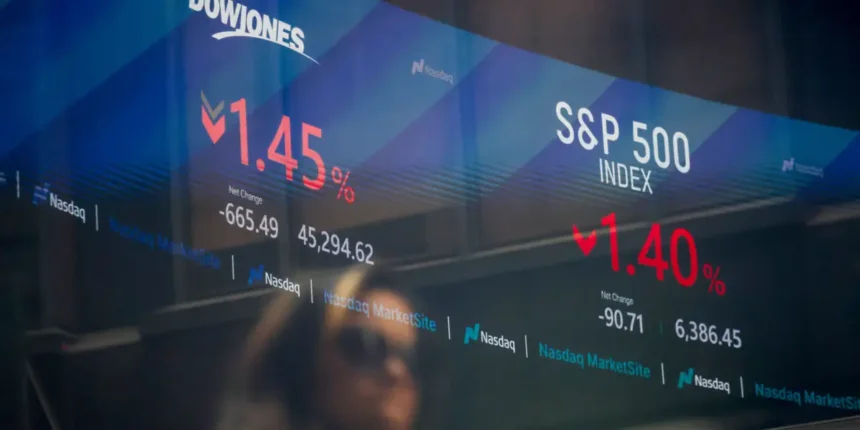
Stocks experienced a significant downturn on Friday, reaching their lowest levels since August of the previous year. This decline has been fueled by escalating concerns regarding the potential impact of U.S. tensions with Iran on oil prices. Both the Dow Jones Industrial Average and the Nasdaq entered correction territory, indicative of a drop of over 10% from recent peaks. The S&P 500 was close to following suit, marking its fifth consecutive week of lost ground.
In an effort to gauge the factors driving this sell-off, financial analysts and commentators took to social media platforms, sharing insights on how market dynamics are evolving. Many noted the increasing anxiety surrounding the White House’s responses to ongoing geopolitical conflicts. Analysts from Barclays highlighted this shift, stating that “flip-flopping and headline fatigue” are starting to undermine the effectiveness of the so-called “Trump put,” a term denoting the belief that President Donald Trump would step in to protect markets during downturns. As tensions mount, investors appear to be losing faith in this perceived safety net, particularly regarding the resolution of conflicts.
Economist Mohamed A. El-Erian, in a post on X, characterized the week’s volatile trading as detrimental, affecting both stocks and bonds. He pointed out that even diversified portfolios, typically shielded from stock market declines, are feeling the strain. El-Erian noted that the classic “60/40” investment strategy, which allocates 60% to stocks and 40% to bonds, is experiencing its most substantial losses since 2022.
Marko Kolanovic, the former chief market strategist at JPMorgan, weighed in on the energy sector’s struggle, specifically mentioning the delayed reopening of the Hormuz Strait, a crucial waterway for global energy transport. He criticized the administration’s efforts to manage oil prices, suggesting that their tactics have proven counterproductive and have masked underlying issues.
Peter Mallouk, CEO of Creative Planning, framed the current market conditions as a reaction to short-term factors, contending that the long-term focus should remain on earnings rather than temporary disturbances. He emphasized that while short-term anxieties revolve around geopolitical tensions and fluctuating oil prices, long-term results depend fundamentally on corporate profitability.
Conversely, Apollo Global Management’s chief economist, Torsten Sløk, took a more optimistic stance, asserting that the market’s reaction to the situation in Iran is overly pessimistic. He suggested that the period of volatility is likely to be short-lived, predicting a shift towards stability in oil markets over the next several decades.
Market experts including New York Stock Exchange trader Peter Tuchman cautioned that without a resolution in sight, persistently high oil prices bring serious inflationary risks. Tuchman noted in a video that ongoing conflicts will likely maintain upward pressure on oil prices, complicating economic conditions.
Larry Weiss, head of trading at Instinet, reflected investors’ skepticism toward official assurances regarding the timeline of the conflict. He stated that faith in the administration’s statements has eroded, complicating market recoveries.
Mark Zandi from Moody’s Analytics projected that for the U.S. economy to avoid a significant downturn, oil prices would need to hover around $125 per barrel in the second quarter. Current prices, near $112, underline the tension in energy markets, which analysts deem sensitive to geopolitical developments.
As analysts from Barclays and JPMorgan assessed broader implications for the economy, they noted that the ongoing confrontation has seeded fears of stagflation, referencing previous shocks such as Russia’s invasion of Ukraine. If the conflict continues, the forecasts suggest a sustained increase in inflation amidst a slowdown in global growth.
Overall, the current market landscape appears fraught with uncertainty as investors grapple with both immediate concerns related to conflict and the broader implications for economic stability.