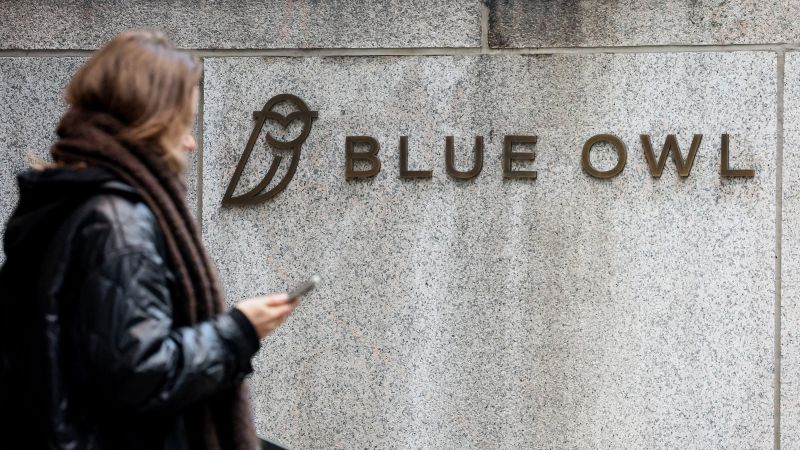
In the financial world, Blue Owl Capital has recently shifted from being a prominent player in the private credit sector to a symbol of the vulnerabilities that plague the $1.8 trillion industry. The firm, known for lending to risk-prone companies, has faced a significant downturn, experiencing a staggering 40% drop in market value this year. The situation escalated when Blue Owl reported an unprecedented surge in investor requests to withdraw their funds, prompting the company to impose limits on withdrawals.
In a letter to shareholders, Blue Owl disclosed that withdrawal requests had skyrocketed to 41% of its $6 billion tech-focused fund—an increase from 15.4% the previous quarter—and 22% of its flagship $36 billion fund, up from 5%. As a response, the firm has only honored a fraction of these requests, permitting payouts of just 5% from both funds. Following the announcement, Blue Owl’s stock (OWL) dipped 9% before recovering slightly by the day’s end.
This tumultuous period has also affected other major players in private credit, including Apollo Global and Ares Management, whose shares saw declines as investor sentiment wavered. Blue Owl executives attributed the spike in withdrawal requests to “market perception,” emphasizing that the fundamental credit quality of the portfolio remains robust. However, they acknowledged heightened concerns regarding potential disruptions from artificial intelligence in the tech sector, wherein a substantial portion of their business is concentrated.
The response from other firms in the private credit space has mirrored Blue Owl’s, with many instituting similar caps on redemption requests amid rising anxieties among investors. While advocates of private credit argue that these developments reflect growing pains rather than systemic flaws, analysts and economists caution that such rapid growth in a relatively opaque market raises red flags. The sector’s expansion, particularly after the 2008 financial crisis, had attracted a significant influx of investment as investors pursued higher returns than those available in public markets.
Experts have voiced concerns over the risk factors associated with such rapid growth. “When you see some segment of the financial sector that is kind of coming out of nowhere and growing very fast, that’s an indication that maybe there is some risk building up,” said finance professor Itay Goldstein from the University of Pennsylvania’s Wharton School.
Historically, private credit has grown from a niche asset class into a substantial component of the financial landscape. Recent bankruptcies involving companies reliant on private financing have heightened scrutiny of the sector, exacerbated by fears surrounding artificial intelligence’s potential impact on software companies—many of which are significant borrowers in this arena.
In a related report, the Wall Street Journal highlighted discrepancies in Blue Owl’s portfolio disclosures, indicating that the company has substantial exposure to software—much higher than what its public filings suggested. Blue Owl’s Credit Income Corp. fund, for instance, reported that 11.6% of its portfolio consisted of loans to “internet software and services,” but the Journal’s analysis posited that this figure could be closer to 21%.
While the immediate impact on consumers may not be evident, the potential for broader repercussions exists. U.S. banks that offer consumer loans often engage with private lenders, meaning that significant losses from private credit exposure could lead banks to tighten their lending standards. “We shouldn’t underestimate what could be the impact of these small problems, because once the uncertainty starts, and you don’t know which bank is holding what, then there is a kind of general panic taking over the financial system,” Goldstein warned.
As Blue Owl navigates through this challenging period, the larger implications for the private credit industry and the financial markets as a whole remain to be seen.