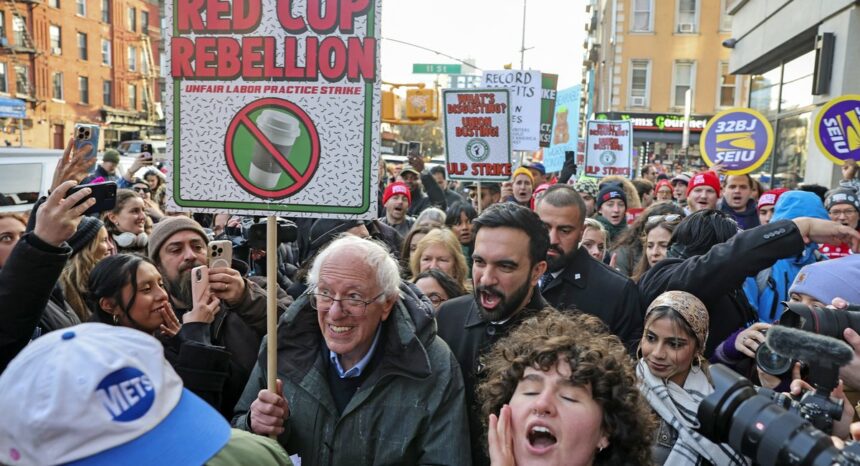
New York City Mayor Zohran Mamdani’s recent decision to refrain from joining Long Island Rail Road (LIRR) workers on the picket line has sparked discussions about the complexities of labor relations and political affiliations. Despite his history of standing in solidarity with labor movements, such as marching with striking nurses and Starbucks baristas, Mamdani has opted to remain on the sidelines during this labor dispute, expressing hope instead for a fair resolution between the LIRR and its workers.
During a press conference, Mamdani articulated his desire for both parties to reach a fair deal that keeps the commuter rail system operational. This stance contrasts with the actions of some of his political allies, such as State Assemblymember Claire Valdez, who marched alongside LIRR workers outside Penn Station on Monday morning. Valdez, also endorsed by Mamdani in her congressional run, emphasized that New York State has the resources to ensure fair wages and dignity for the workers involved. When asked about Mamdani’s absence from the picket line, she refrained from speculating, firmly stating that her focus was on supporting the workers.
Both Mamdani and Valdez are members of the Democratic Socialists of America (DSA), which has voiced support for LIRR workers through its Long Island chapter, insisting that the workers deserve fair compensation rather than being blamed for budgetary issues. However, political analysts suggest that Mamdani’s decision not to actively participate in the strike is not unexpected given his role as mayor. Joshua Freeman, a professor of history at the CUNY School of Labor and Urban Studies, pointed out the differing dynamics at play between public sector unions like the LIRR workers and the private sector unions Mamdani has previously supported. He noted that openly aligning with the railroad workers could diminish Mamdani’s negotiating power with other municipal unions representing teachers and police officers.
Freeman highlighted the necessity for Mamdani to secure billions in city funding during the ongoing state budget negotiations, indicating that a public endorsement of the LIRR workers could risk antagonizing Governor Kathy Hochul. Hochul has positioned herself against meeting several of the union’s contract demands, warning that doing so could lead to significant fare hikes for commuters.
Nicole Gelinas, a conservative think tank senior fellow at the Manhattan Institute, noted another layer of political consideration, suggesting that LIRR union members may lean more toward Republican ideals. This presents a unique challenge for Mamdani, as the workers involved often reside in areas represented by GOP leadership, such as Nassau County Executive Bruce Blakeman, who openly supports the union’s cause.
Despite the potential backlash, Freeman expressed skepticism that Mamdani would face significant political consequences for his choice to sidestep active participation in the strike. Instead, he indicated that Mamdani’s allies likely understand the complexities of his position and the broader pressures at play.
As the dispute continues, the balancing act between support for labor activism and the practicalities of governance remains a critical consideration for Mamdani and his administration.