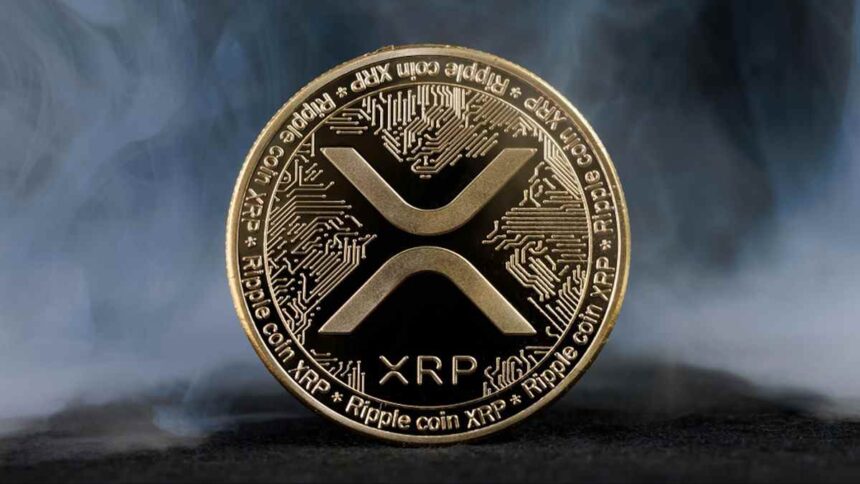
The price of XRP experienced a significant decline over the weekend, dropping to $1.30 amid a wave of profit-taking, particularly in the context of Ripple’s ambitions for decentralised identity (ID) initiatives. This downturn marked a noticeable underperformance relative to a broader market that is also seeing a slight decline, primarily influenced by renewed institutional selling pressure.
In recent trading activity, overall trading volume surged to $1 billion in the past 24 hours, reflecting a 4% increase from the previous day. However, XRP-linked exchange-traded funds (ETFs) saw a noteworthy net outflow of $3.56 million for the week. This marks the first withdrawal in April, snapping a two-week streak of inflows and signaling heightened selling activity among institutional investors. Such movements indicate a weakened appetite for XRP among large-scale investors, which poses a challenge to any potential price recovery, given that ETFs are a significant avenue for capital inflow into the cryptocurrency market.
In tandem with XRP’s decline, Bitcoin also showed a minor decrease of 0.15%, contributing to an overall dip in the total crypto market cap by 0.24%. Technically, XRP is trading below its seven-day average of $1.33 and its 30-day average of $1.39, suggesting a bearish trend. Market analysts have noted a weakness in XRP that is not only underperforming the broader market but also lacking the strength to reclaim key resistance levels. A return to the $1.33 mark could indicate short-term stabilization for the token.
Market conditions are underpinned by mounting institutional selling, yet eyes are set on an upcoming legislative milestone. In late April, the Senate Banking Committee is expected to discuss the possible markup of the CLARITY Act, which could provide much-needed clarity on the regulatory status of XRP, serving as a potential catalyst for a future price rebound.
On the innovations front, Ripple President Monica Long highlighted decentralised digital identity as a significant use case for the XRP Ledger (XRPL). This ambitious vision envisions users being able to tokenize personal data, such as Know Your Customer (KYC) credentials and even sensitive information such as DNA, into private and portable tokens. These tokens would be secured through zero-knowledge proofs (ZKPs), allowing individuals to manage and verify their credentials without revealing sensitive details.
In a related development, the DNA Protocol recently completed the first ZK privacy transaction on the XRPL testnet, signaling advancements in privacy and identity management within the cryptocurrency space. Additionally, Ripple is collaborating with Singapore’s Monetary Authority of Singapore (MAS) to enhance trade finance solutions using RLUSD, further emphasizing their commitment to innovative applications of blockchain technology.