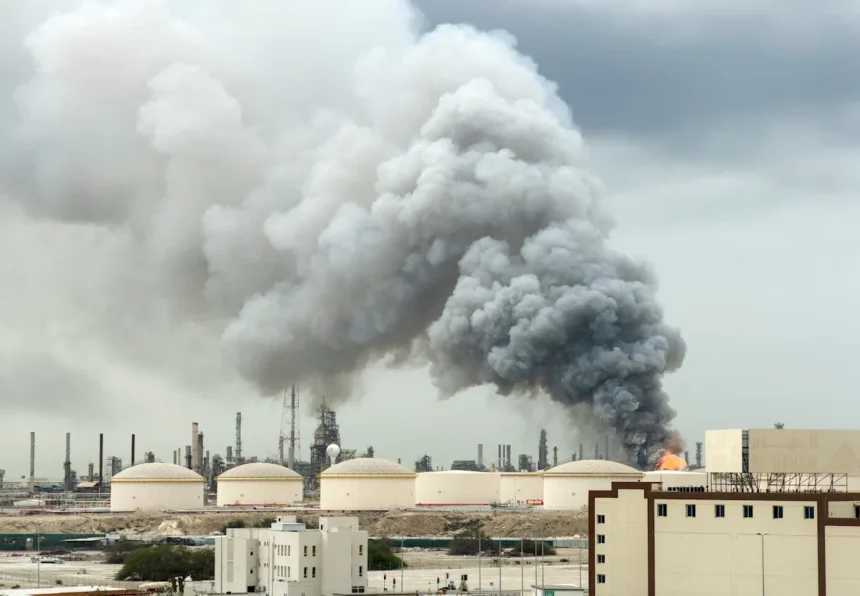
Attacks by Iran on critical energy infrastructure escalated over the weekend, with significant strikes hitting Bahrain’s BAPCO oil refinery and the headquarters of Kuwait Petroleum Corporation, the state-owned energy giant in Kuwait. Reports also indicated that several key power and desalination facilities across Kuwait came under attack.
A post on X, attributed to an account linked to Iran’s parliamentary speaker Mohammad Bagher Ghalibaf, a former general in the Islamic Revolutionary Guard Corps, hinted at a grave escalation. The account warned that if Iran did not receive a credible signal from U.S. officials regarding a reconsideration of potential attacks on Iranian infrastructure, a preemptive and large-scale offensive targeting Saudi Arabia’s oil and electricity infrastructure, as well as that of Israel, would be imminent. This post emphasized that Iran had refrained from initiating what it termed an “irreversible infrastructure war” so far, but suggested that the window for such restraint could close within 24 hours.
In parallel to these developments, observers in the oil market were closely monitoring potential signs of a partial resumption of oil flows through the Strait of Hormuz, a crucial global oil transit point. Oman’s foreign ministry reported on Sunday that discussions between Omani officials and their Iranian counterparts focused on ensuring the smooth transit of oil through the Strait amid the heightened tensions.
Moreover, Iran’s military officials announced that Iraqi ships would be permitted to transit the Strait of Hormuz, a move that could reintegrate approximately 3 million barrels of oil per day back into the global market. The Iranian president’s office also indicated that the Strait of Hormuz would remain accessible once financial damages incurred from the ongoing conflict were compensated through transit fees.
On the international oil front, the Organization of Petroleum Exporting Countries (OPEC+) reached a consensus to raise its monthly production quota by 206,000 barrels per day for May, mirroring the increase established for the previous month. This decision reflects the cartel’s ongoing adjustments in response to fluctuating global oil needs amid the turbulent geopolitical landscape.