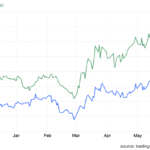
Bitcoin is currently hovering just below the $70,000 mark, creating a complex narrative within the derivatives market. Data from Santiment indicates that a substantial $6 billion in short positions could be liquidated if the price ascends to $72,500. This comes amid Bitcoin’s repeated attempts to breach the $70,000 barrier, reflecting a market that is increasingly strained and lacking conviction.
Recent trends suggest a notable shift in sentiment towards Bitcoin. The bullish-to-bearish ratio has declined sharply to 0.81 to 1.00, marking the lowest level since February 28. Reports show that discussions surrounding Bitcoin are now tilted significantly towards bearish sentiment, with this being the highest ratio of negative discussions since the same date earlier in the year. As Bitcoin is priced at $66,800, fears and doubts (commonly referred to as FUD – fear, uncertainty, doubt) appear to be re-emerging, signaling a key loss of confidence within the community.
The recent downturn in sentiment can be largely attributed to Bitcoin’s lack of substantial movement in 2026. Throughout the year, Bitcoin has shown limited follow-through on price changes, leading to trader fatigue and growing anxiety about future market direction. Typically, sentiment can indicate potential price movements; when fear escalates, Bitcoin has historically shifted in the opposite direction. Despite the deteriorating mood, the cryptocurrency has not experienced a significant downward spiral but has continued to range around the same price levels.
As of the latest updates, Bitcoin faces a significant challenge in attempting to break past the $70,000 threshold for the seventh time since early February. The price was reported at approximately $69,550, a significant recovery from a drop to $60,000 earlier in the month. Moreover, Bitcoin’s current valuation remains approximately 45% lower than its all-time high of $126,080, achieved on October 6, 2025.
In the futures market, trends indicate that a considerable number of short positions are heavily clustered around the $72,500 mark. In contrast, around $2 billion in long positions are concentrated closer to $65,000. This disparity in positioning suggests that the market is currently biased, and should prices increase, it could trigger rapid liquidations, potentially driving the price higher.
External factors are also contributing to the current sentiment chaos. Geopolitical tensions, particularly surrounding the US-Iran conflict, coupled with uncertainty regarding the legislative Clarity Act, are viewed as inhibiting factors for buyer confidence in an already stagnant market. While these issues may not directly influence Bitcoin’s price movements, they tend to heighten caution among investors.
Long-term indicators offer less reassuring signals. According to CryptoQuant data, Bitcoin is trading above its realized price of $54,279, which historically serves as a threshold between normal market conditions and deeper stress. A decline below this level is often necessary for the initiation of a stronger accumulation phase among buyers.
As analysts continue to monitor Bitcoin’s price movements and the overall market sentiment, traders remain vigilant, observing both technical setups and external influences that could impact the leading cryptocurrency’s trajectory in the coming days and weeks.