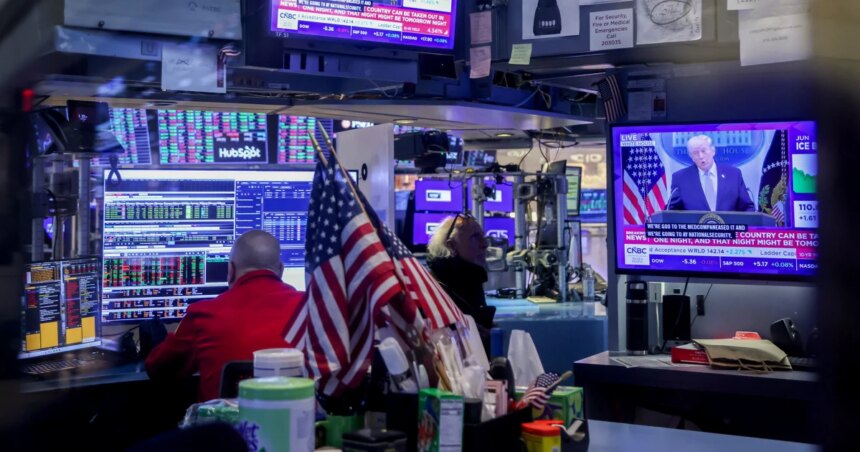
Oil prices experienced a dramatic decline while U.S. stock futures surged after President Donald Trump proclaimed a “double-sided ceasefire” in the ongoing conflict with Iran, following mediation efforts by Pakistan. In a statement on social media, Trump emphasized that the ceasefire was contingent upon Iran’s agreement to ensure the “COMPLETE, IMMEDIATE, and SAFE OPENING of the Strait of Hormuz,” a crucial maritime route for global oil trade. A White House official confirmed that Israel would also adhere to the agreed two-week ceasefire.
In immediate response to the news, the price of U.S. crude oil plummeted over 16%, dropping below $94 per barrel; this marks a significant decrease from earlier in the day when prices had reached as high as $117. Stock market futures reacted positively, with the S&P 500 futures climbing more than 2.5%. The Dow futures surged by 1,000 points, and the Nasdaq 100 futures saw an increase of nearly 3%. Additionally, futures tracking the Russell 2000 index rose by 2.8%. Other commodities, such as natural gas, wholesale gasoline, and heating oil also reflected lower prices following the ceasefire announcement.
Despite this sharp downturn, U.S. crude oil remains over 70% higher year-to-date. The Strait of Hormuz has faced significant disruptions since early March, with marine traffic stalled due to concerns over safety from Iranian military actions, including drone attacks on tankers. Historically, this strait is critical, facilitating the passage of more than 20% of the world’s daily oil supply.
Investor sentiment had been shaky prior to the announcement, with many closely monitoring developments for signs of either a potential cessation of hostilities or further escalation. Following Trump’s statement, Iran’s foreign affairs minister, Seyed Araghchi, indicated that for the duration of the two-week ceasefire, safe passage through the Strait would be managed in coordination with Iran’s Armed Forces, though specifics regarding tolls or conditions for passage remain unclear.
The Trump administration has consistently asserted that a cessation of fighting would lead to lower U.S. gas prices. As of Tuesday, the average retail price for gasoline stood at $4.14 per gallon, and diesel prices averaged $5.64, nearing last year’s peak of $5.82.
However, analysts warn that a ceasefire lasting only two weeks may not significantly alter the current conditions in the Strait, potentially causing ongoing upward pressure on oil and fuel prices. GasBuddy analyst Patrick De Haan expressed skepticism, suggesting that the status quo would likely persist with limited movement through the strait.
In financial markets, U.S. Treasury yields dipped, reflecting a momentary relief among traders. Additionally, prices for precious metals rose sharply, with spot gold increasing by 2.5% and silver climbing 4.6%. Global markets in Asia and Europe prepared to follow suit, with futures contracts indicating a nearly 3% rise for Japan’s Nikkei index at its opening.