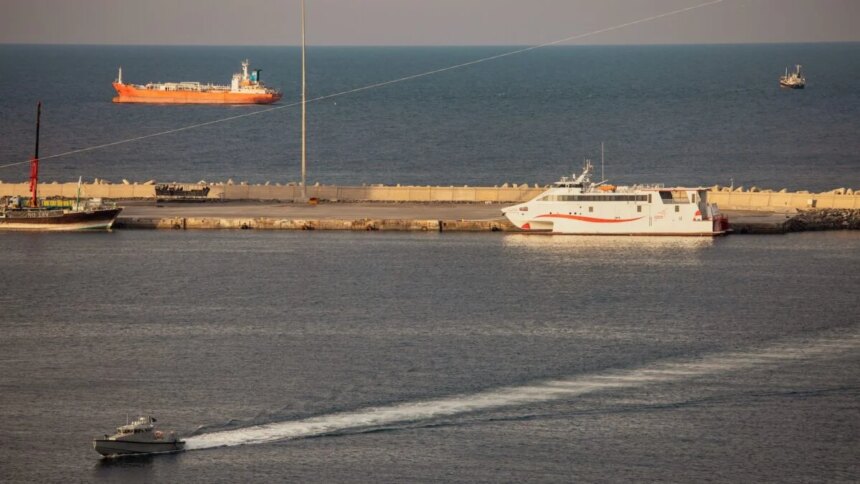
Iran has introduced a new toll payment system for oil tankers navigating through the vital Strait of Hormuz, demanding transactions to be carried out in cryptocurrency, according to a report from the Financial Times. This decision comes as part of an ongoing effort to adapt to financial sanctions and leverage emerging technologies within its oil trade. Hamid Hosseini, spokesperson for the Iran Oil, Gas and Petrochemical Products Exporters’ Union, is quoted in the report detailing the new payment structure.
Similar to earlier reports by Bloomberg, which highlighted Iran’s preference for using stablecoins like Tether’s USDT, the Financial Times has broadened the conversation to include bitcoin as a potential payment option. This adds a layer of flexibility for Iran amidst its sanctions-imposed isolation on the global market.
Under the new regulations, vessels must contact Iranian authorities via email prior to their passage, providing details about their cargo. Following this, Iranian authorities will propose a toll fee calculated at $1 per barrel of oil, which must be settled in digital currency. To facilitate swift transactions, vessels are reportedly given a fleeting opportunity to make payments in bitcoin once assessments are complete. This method minimizes traceability, addressing the challenges imposed by international sanctions.
Hosseini emphasized the immediacy of the payment process, stating that vessels receive only a few moments to complete the transaction, thus complicating any attempts at tracking or seizing those funds. This new payment strategy emerges against a backdrop of renewed tensions in the region, particularly following a ceasefire deal between Iran and the U.S. However, that fragile agreement seems precarious after Iranian forces halted vessels in the Strait of Hormuz, reportedly in a response to an attack involving Israeli forces in Lebanon.
Bitcoin’s inclusion as a payment method marks a significant pivot from the previous emphasis solely on stablecoins, which often contain mechanisms that allow for payment blocking or asset seizures—attributes that diminish their utility in untraceable financial transactions, particularly in the politically charged environment of Iran. Notably, the reports also suggested that the Chinese yuan might be acceptable for toll payments, reflecting Iran’s broader strategy to seek alternatives to the U.S. dollar.
Cryptocurrencies have gained traction in Iran as a means of circumventing international sanctions. Earlier this year, blockchain analytics firm Elliptic revealed that the Central Bank of Iran had acquired approximately $507 million in USDT to bolster the Iranian rial. Furthermore, amidst economic turmoil and civil unrest, citizens have turned to bitcoin, driving significant withdrawals from local exchanges to the Bitcoin network.
The narrative surrounding bitcoin as “digital gold” has faced scrutiny given its fluctuations during geopolitical upheavals. However, recent market behavior indicates resilience; bitcoin showed a notable increase in value—from roughly $68,000 to around $72,000—following positive sentiments about negotiations with the U.S. and continued interest in non-traditional payment methods for international trade.
As Iran adopts cryptocurrency for oil toll payments, it signifies a potential shift in the landscape of international trade amidst deteriorating trust among nation-states. This move not only highlights the adaptability of the Iranian economy under pressure but also positions bitcoin as a possible medium for global transactions in an increasingly decentralized financial world.