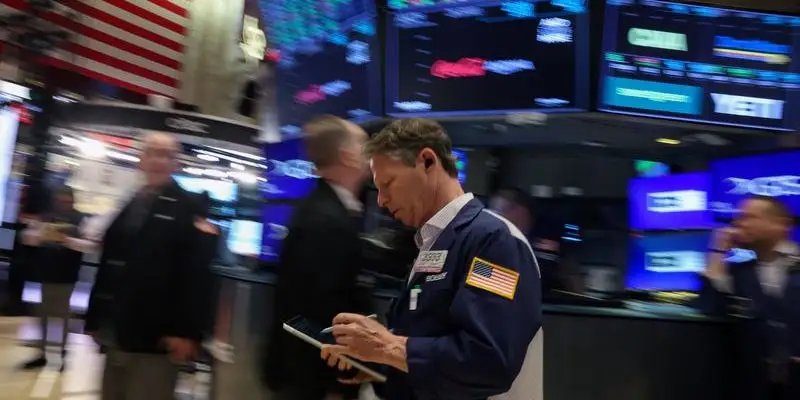
Stock market volatility has become an enduring phenomenon, as noted by Goldman Sachs in recent insights from its macro strategy research team. While geopolitical tensions, specifically the Iran conflict, have contributed to heightened volatility, the firm’s analysts argue that this is only a part of a broader structural trend. They emphasize that even once geopolitical issues settle, a fundamental increase in long-term market volatility is expected to persist.
Goldman Sachs asserts that factors leading to increased volatility may be more profound than initial perceptions suggest. They see the potential for a structural rise in equity volatility driven by a mix of economic dynamics, irrespective of market conditions that may appear stable in the short-term. According to their analysis, the interplay of market forces reminiscent of the late 1990s tech investment boom is set to reemerge, contributing to a more volatile landscape.
The firm has recently revisited its volatility forecasting models, updating projections for longer-term volatility influenced by several factors. They identify cyclical economic deterioration as an obvious catalyst for swings in the market but reinforce that structural drivers are also at play. Notably, Goldman’s analysis frames rising market concentration and a gradual uptick in unemployment as key drivers of increased volatility. They suggest that models that link macroeconomic and market indicators imply a natural rise in the long-term volatility of equity markets as these factors escalate.
Focusing on market concentration, Goldman highlights the growing dominance of AI-related stocks as a significant contributor to this dynamic. The recent bullish run in equities has been fueled by heavy investments in emerging technologies, particularly those tied to artificial intelligence. However, this concentration creates an environment where stocks could experience significant swings in value based on varying investor sentiment regarding the sustainability of these high valuations as the AI cycle evolves.
Historically, market concentration has reached levels not seen since 1932 during the Great Depression, raising alarms about future volatility. Goldman notes that the phenomenon became evident earlier this year when what was once a burgeoning AI market faced a disappointing correction, leading to widespread losses across tech stocks and impacting the broader market.
Moreover, the second prominent driver of equity volatility identified by Goldman is unemployment rates. Their analysis connects fluctuations in labor market statistics with equity volatility, positing that higher unemployment correlates with increased market volatility. The research team highlights a statistically significant relationship between labor market data volatility and equity market fluctuations, suggesting that uncertainty regarding economic outcomes amplifies volatility in capital markets.
As the unemployment rate edges upward from recent lows, Goldman anticipates that this will further contribute to the expected volatility in the stock market. They argue that understanding these interconnected dynamics is crucial for investors navigating what appears to be a new era of heightened market turbulence.