U.S. stock futures plummeted late Sunday evening following an alarming announcement from President Donald Trump regarding a blockade of the strategic Strait of Hormuz. This decision came after peace talks between the United States and Iran concluded without a resolution over the weekend, reigniting concerns about the potential for extended conflict in the region.
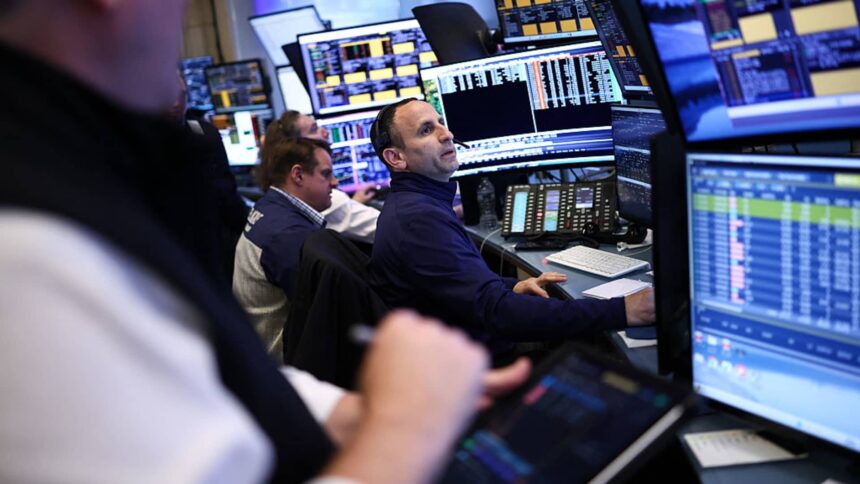
Futures for the Dow Jones Industrial Average saw a decline of 517 points, indicative of a 1.1% drop, while S&P 500 futures mirrored this loss. The Nasdaq 100 futures experienced an even steeper decrease of 1.2%. The negative market reaction was fueled by fears of escalating tensions, which could lead to soaring oil prices that would further pressure global economies.
In a striking declaration posted on Truth Social, Trump stated, “Effective immediately, the United States Navy, the Finest in the World, will begin the process of BLOCKADING any and all Ships trying to enter, or leave, the Strait of Hormuz.” He insisted that Iran would no longer be allowed to profit from what he described as “this Illegal Act of EXTORTION.” The blockade’s implementation was scheduled to start at 10 a.m. ET on Monday, specifically blocking all maritime traffic to and from Iranian ports, though vessels en route to non-Iranian ports would not be obstructed.
The breakdown of negotiations, primarily centered on Iran’s nuclear ambitions, left Vice President JD Vance returning to the U.S. without a deal. Reports indicate that discussions became increasingly complex, with Iran demanding control of the Strait of Hormuz, war reparations, and the unfreezing of its assets.
Adding to market uncertainties, officials in Pakistan have expressed intentions to revive talks soon, despite the ongoing diplomatic stalemate. Furthermore, there are indications that Trump is contemplating resuming military strikes in response to the faltering negotiations, according to sources familiar with the situation.
Market analysts interpreted Trump’s blockade statement as a signal reflecting the uncertainty surrounding the Iranian conflict. Jeff Kilburg, CEO of KKM Financial, noted, “The new blockade statement is an overt signal to equity markets that the Iranian conflict remains uncertain, yet traders are viewing this development as a negotiation tactic versus an actual policy implementation, or as a long-term solution for the Strait of Hormuz.” Still, he suggested that potential buyers could emerge before the market opens on Monday.
The stock markets had recently shown resilience, with hope for a prompt resolution to the conflict contributing to their performance. All three major benchmarks had marked their best weekly returns since November, attributed to the announcement of a two-week ceasefire between the U.S. and Iran. Last week, the S&P 500 surged 3.6%, while the Nasdaq soared approximately 4.7%, and the Dow climbed by 3%.
As the markets brace for the upcoming week, the unofficial start of first-quarter earnings season is expected, with major U.S. banks taking center stage. Goldman Sachs is set to release its results on Monday, followed by reports from Citigroup, Wells Fargo, JPMorgan Chase, Morgan Stanley, and Bank of America later in the week. This financial reporting period will further influence market sentiment amid geopolitical uncertainties.