In the lead-up to Christmas 2025, the Roosevelt Room of the White House became a focal point for a dramatic shift in the pharmaceutical landscape as leaders from nine major drug companies convened with hopes of addressing one of healthcare’s most contentious issues: the soaring prices of medications. Photographers captured this notable gathering, which featured a mix of prominent figures, including three women and six men, waiting for President Donald Trump to arrive.
After a delay, Trump entered with Health and Human Services Secretary Robert F. Kennedy Jr. and several senior officials. He remarked on the executives’ substantial earnings, collectively surpassing $100 million annually. Among them stood Robert M. Davis, CEO of Merck & Co., whose flagship cancer drug, Keytruda, has been pivotal yet controversial in the global healthcare conversation.
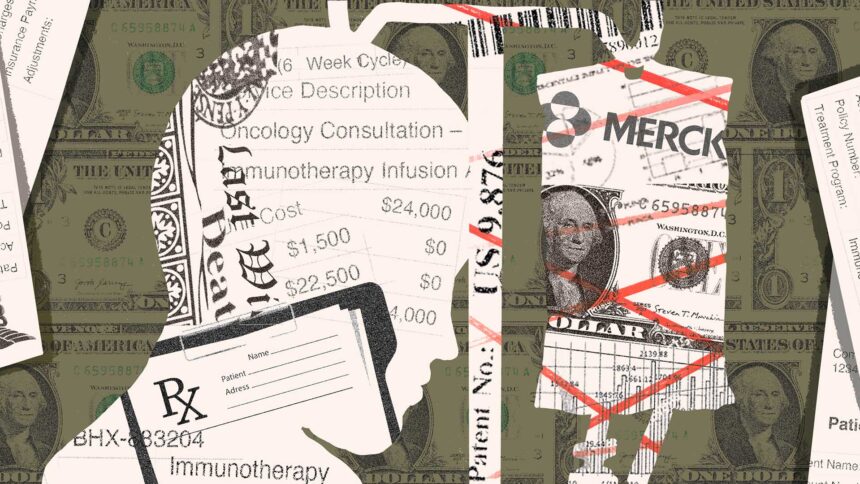
Davis expressed his enthusiasm for reduced drug prices, affirming his support for Trump’s initiatives. However, he notably omitted any mention of slashing Keytruda’s costs—even as the medication generated nearly $32 billion in sales for Merck in 2025. The drug, widely recognized for its cancer treatment capabilities, has left many patients burdened by exorbitant costs—ranging from approximately $80,000 a year in Germany to as high as $208,000 in the U.S.—making it unreachable for countless individuals.
An investigation by the International Consortium of Investigative Journalists unveiled the methodologies utilized by Merck to maintain the high price of Keytruda, which is critical for many cancer patients. Techniques included aggressive lobbying, delaying generic alternatives, and leveraging complex patent applications to safeguard the drug’s market dominance. This not only places incredible strain on healthcare systems globally but also pushes patients towards extreme measures, including black-market purchases.
The findings expose glaring inequities worldwide as cancer, now a leading cause of death, is increasingly treated without affordable access to necessary medications. In nations with less robust healthcare systems, such as India and Brazil, entire families grapple with the financial impacts of securing Keytruda. The stark contrast is evident in wealthier countries where expensive treatments strain government budgets, prompting citizens in financial distress to seek legal battles for access to life-saving drugs.
Clinicians and patients alike report that the high costs of treatments like Keytruda effectively create a healthcare lottery, allowing only a select few to access this advanced treatment. For instance, some oncologists in Guatemala are forced to choose which patients receive the medication while battling limited resources, illustrating the tragic reality faced by those dependent on such critical therapies.
Merck’s advertising has positioned Keytruda as transformative, yet the financial reality is grim, exemplified by a study showing that treatment could cost patients several times their monthly income in various countries. Despite recurring claims of providing assistance, critics argue that pharmaceutical companies are primarily motivated by profit, even as grassroots efforts like crowdfunding emerge for patients desperate to afford treatment.
As pressures mount, the pharmaceutical industry faces an ever-evolving landscape shaped by public demand for accountability and accessibility. The interplay between drug pricing and patient survival raises significant ethical questions about healthcare as a commercial enterprise versus a universal right, prompting calls for reform in an industry often accused of putting profits above lives.
It remains to be seen how these dynamics will unfold, especially amid growing scrutiny and the call for more equitable healthcare solutions in not just the United States, but globally.