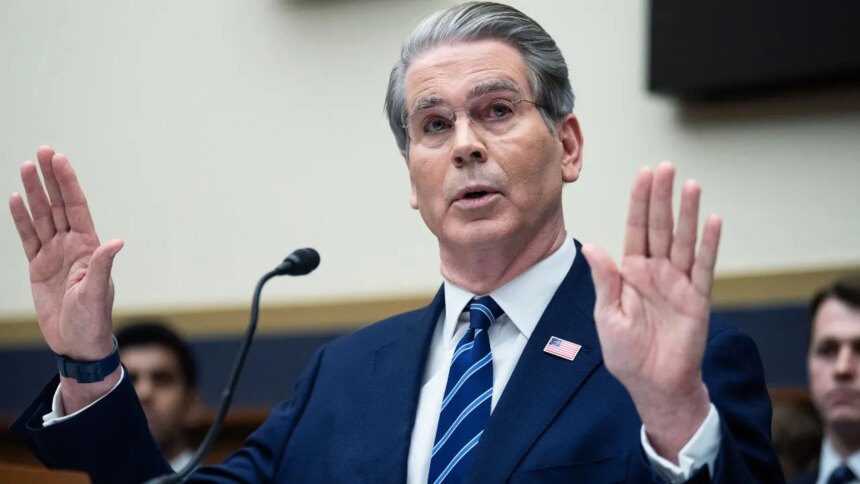
During a recent appearance on FOX Business, U.S. Treasury Secretary Scott Bessent provided insights into the United States’ new economic campaign against Iran, dubbed “Operation Economic Fury.” This initiative is part of a broader strategy aimed at exerting significant financial pressure on the Iranian regime, which Bessent claims is now on the brink of economic collapse.
Bessent disclosed that the U.S. has successfully seized approximately $1 billion in Iranian cryptocurrency assets, stating, “We have seized about a billion dollars of their crypto… Just outright grabbed the wallets.” This action is part of a series of aggressive measures aimed at disrupting Iran’s financial networks. Bessent emphasized that the Iranian economy has been severely impacted, with reports indicating that up to 50% of Iranian military personnel are currently not receiving their salaries and police officers are refusing to report for duty. Bessent noted the inflation rate in Iran is soaring above 200%, leading the regime to issue food vouchers to cope with the economic turmoil.
Launched in March 2025, Operation Economic Fury has targeted Iran’s financial lifelines through asset seizures, bank account freezes, and diplomatic pressure on foreign nations to sever connections with Tehran. Bessent explained, “We are working with our allies all over Europe to grab villas and houses and properties,” underscoring that these assets were acquired through what he termed the “theft” from the Iranian populace. He further revealed that prior to the implementation of these measures, the Iranian leadership was siphoning off between $400 to $500 million monthly, distributing these profits among numerous top officials.
Amid ongoing negotiations between the U.S. and Iran, Bessent highlighted the complexities involved, particularly the challenges posed by the distinct factions within Iranian leadership. He noted a shift in power dynamics, stating, “We did not have regime change, but we changed the regime,” indicating that lower-level leaders had been removed from their positions, leaving the U.S. to negotiate with a less experienced tier of leadership.
Bessent expressed concern over Iran’s aggressive military actions in the Persian Gulf, which he believes have made the regime’s position more precarious. The Iranian Revolutionary Guard Corps (IRGC) has been noted for launching drone and missile attacks across the region, escalating tensions with Gulf Cooperation Council (GCC) states. Bessent mentioned that these actions have encouraged GCC nations to be more forthright about their oil trading relationships with Iran.
Additionally, Bessent addressed the morale of U.S. service members involved in enforcing the naval blockade in the Strait of Hormuz. Reports suggest that these young servicemen and women are committed to their mission and eager for engagement, reflecting a strong sense of duty amid the heightened geopolitical tensions.
As the U.S. continues its assertive strategy against Iran, the long-term implications for both the Iranian economy and regional stability remain to be seen.