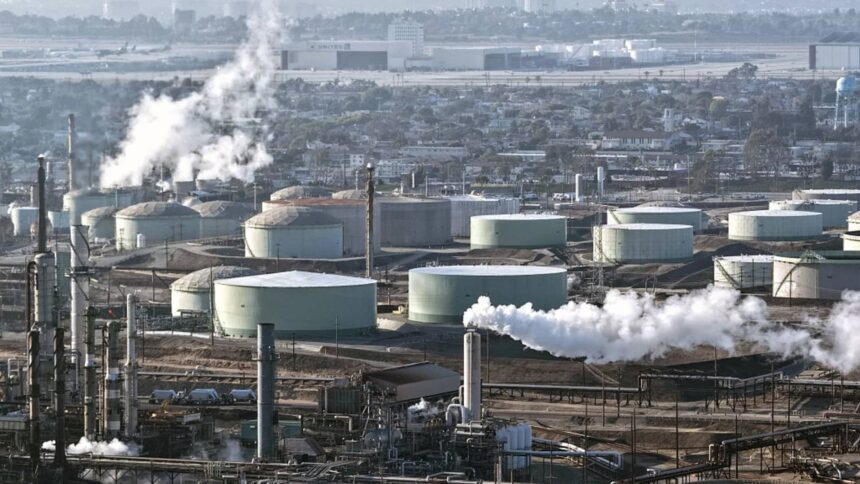
Oil prices experienced a notable decline on Tuesday as traders navigated the complexities surrounding a U.S. blockade of Iranian shipping amid ongoing peace talks between the United States and Iran. U.S. crude oil futures for May delivery fell by more than 2%, settling at $96.91 per barrel, while international benchmark Brent crude for June delivery saw a decrease of 1.88%, closing at $97.49 per barrel.
The recent drop in oil prices coincided with comments from U.S. Vice President JD Vance, who stated that the future of peace negotiations with Iran is contingent upon Tehran’s response. Vance, following a weekend of talks that did not yield a breakthrough, emphasized in a Fox News interview that “the ball is in the Iranian court” regarding any further discussions or potential agreements. He highlighted that a successful deal could bring significant benefits to both nations, provided that U.S. demands—especially concerning Iran’s nuclear program—are met.
This situation unfolded as the U.S. initiated a blockade of Iranian ports in the Persian Gulf. Announced by President Donald Trump, the blockade was described as a sharp escalation after a two-week ceasefire period. The United States Central Command later clarified that the blockade would specifically target ships entering or leaving Iranian ports and coastal areas.
The blockade poses a significant risk to Iran’s oil exports, which were estimated at around 1.7 million barrels per day last month, according to Vivek Dhar from the Commonwealth Bank of Australia. Dhar noted that the blockade further tightens the market for oil and refined products, accentuating the potential for heightened scarcity and price shifts.
Market analysts are closely monitoring these developments, as the situation not only impacts oil prices but also broader geopolitical dynamics in the region. The intricate interplay between U.S. sanctions, international diplomacy, and oil supply chains remains a focal point for traders and policymakers alike.