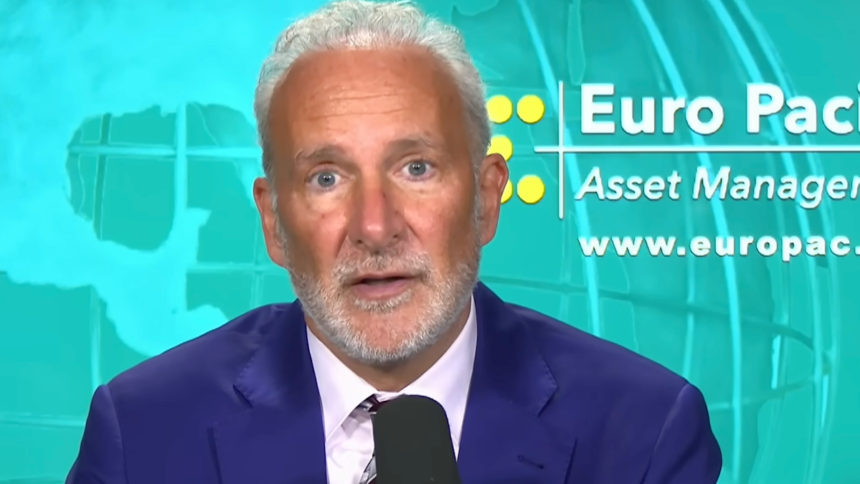
Investor sentiment is shifting as economist Peter Schiff warns of potential pitfalls amid a sustained stock market rally. In an interview with TheStreet, Schiff expressed his concerns over what he perceives as a dangerous disconnect between market performance and economic fundamentals. With the S&P 500 appreciating 80% over the past five years and the Nasdaq rising by 96%, many investors remain optimistic despite underlying risks.
“I think investors have gotten a lot of things wrong, but that hasn’t stopped the market from going up,” he stated. Schiff emphasized that the ongoing rally may not be rooted in sound economic principles, likening it to a “tick time bomb.”
Schiff believes that the current market optimism is driven more by hope than reality. “The markets are really looking past a lot of problems,” he asserted, and warned of a potential reckoning on the horizon. He highlighted that the U.S. economy is facing multidimensional issues, suggesting that it might be on the brink of not just a financial crisis, but a broader crisis concerning the U.S. dollar and sovereign debt. With the national debt approaching $39 trillion, concerns over fiscal sustainability are mounting.
In a moment of reflection, Schiff was asked to choose between a “resilient economy” or a “recession delayed.” He unambiguously chose the latter, hinting that the U.S. might have already been in a recession for years, with official assessments masking deeper economic pain. Depending on policy responses, particularly those aimed at mitigating downturns ahead of midterm elections, Schiff posited that an official acknowledgment of the recession could emerge as soon as this year or as late as 2027.
When queried about what might shift his currently bearish outlook, Schiff noted that many of his past warnings have manifested, with only one major consequence—the ultimate market crash—yet to unfold.
For investors with substantial gains, Schiff urged caution. “Take profits and look for alternatives,” he suggested, specifically advocating for precious metals like gold and silver as safe havens. Gold, often regarded as a hedge against inflation and currency vulnerability, has seen a robust increase of over 35% in the past year, according to Schiff. He pointed out a growing “de-dollarization trend,” which could lead to increased purchasing of gold from both retail investors and institutions.
Gold’s appeal has been echoed by other financial heavyweights. For instance, JPMorgan CEO Jamie Dimon indicated that gold could see prices soar to $10,000 per ounce given the current circumstances. Investors looking for a method to diversify their portfolios could consider opening a gold IRA, potentially leveraging tax advantages while securing their retirement funds against economic turbulence.
Additionally, as Schiff warns of a precarious market landscape, experts suggest the importance of diversification. Platforms like WiserAdvisor can connect investors with financial advisors to review and stress-test investment portfolios, helping them navigate the complexities of market volatility.
In light of warnings from figures like Schiff and Goldman Sachs CEO David Solomon, who predicts a 10% to 20% drawdown in equity markets within the next couple of years, diversification appears more critical than ever. Innovative investment options, such as fractional ownership in high-value artwork through platforms like Masterworks, are becoming more accessible to everyday investors—offering a unique avenue for portfolio diversification.
In conclusion, while markets may currently reflect optimism, economic fundamentals suggest that caution may be warranted. As investors weigh their options, a combination of protective hedges, diversified assets, and expert financial guidance could be essential in navigating the choppy waters ahead.