Most stocks have experienced a tumultuous ride in 2026, primarily due to the ongoing conflict in Iran. Before the war, concerns were already mounting over the high valuations of large tech and artificial intelligence companies, alongside various factors that negatively impacted their performance. In recent weeks, however, the market has seen a significant bounce back, achieving all-time highs. Analysts are optimistic about the potential for substantial gains in prominent tech and AI stocks like Nvidia and Netflix.
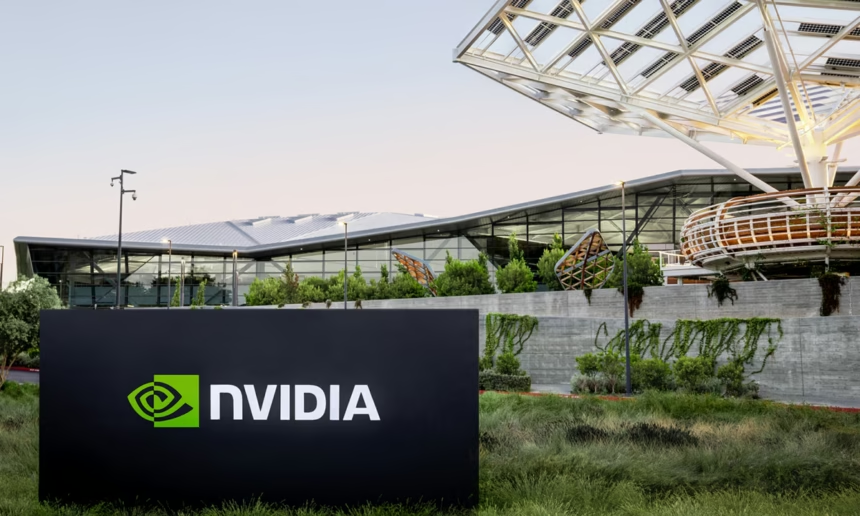
Nvidia has shown a remarkable recovery this year, with its stock up approximately 12% as of late April. The company’s impressive earnings report for the fourth quarter of its fiscal 2026 outpaced Wall Street’s expectations, and forecasts for the upcoming quarter remain robust. CEO Jensen Huang has shared ambitious sales projections, anticipating $1 trillion in revenue between the launches of its Blackwell and Vera Rubin platforms from March 2023 to the end of 2027. Moreover, there are indications that Nvidia is preparing to resume chip sales to China, a critical market, though no official sales announcements have been made yet.
Despite facing challenges related to high valuations and hefty infrastructure investments in AI, Nvidia’s substantial market presence—approximately $5 trillion in market capitalization—makes it a focus of investor scrutiny. Current trading stats show a slight increase of 0.72%, with shares priced at $209.78. Analysts remain predominantly bullish, with 41 out of 43 recent reports rating the stock as a buy. The average target price suggests a potential 35% increase from current levels, while the highest target of $380 indicates an 88% upside. Bernstein analyst David Dai has highlighted the upcoming Vera Rubin platform as a “monster,” boasting significantly enhanced performance metrics with minimal increases in transistor count.
Meanwhile, Netflix has navigated a challenging year filled with distractions, including a highly publicized bidding war for assets belonging to Warner Bros. Discovery. Although Netflix initially agreed to a deal, it ultimately withdrew in favor of a $2.8 billion breakup fee after facing aggressive competition. The company’s stock had seen improvements, but a disappointing earnings report led to further scrutiny. Despite implementing subscription price increases across all tiers, Netflix did not raise its full-year revenue outlook, and the current-quarter projections were underwhelming. Additionally, the announcement of co-founder Reed Hastings’ departure added to the uncertainty.
At present, Netflix’s stock is showing a slight decline of 0.50%, currently priced at $91.98. However, Wall Street remains largely optimistic. Among the 35 analysts who have produced recent reports, 29 maintain a buy rating. The average target price suggests a 24% upside, and the highest target indicates a potential gain of 47%. Recent expert recommendations post-earnings advise taking advantage of price drops, emphasizing Netflix’s strength in the streaming sector and its consistent engagement metrics, which enhance its pricing power.
Overall, Wall Street analysts firmly believe that Nvidia will lead to substantial returns over the next year. However, Netflix is also viewed positively, given its resilient business model that doesn’t overly depend on AI, even as it benefits from technological advancements in the field.