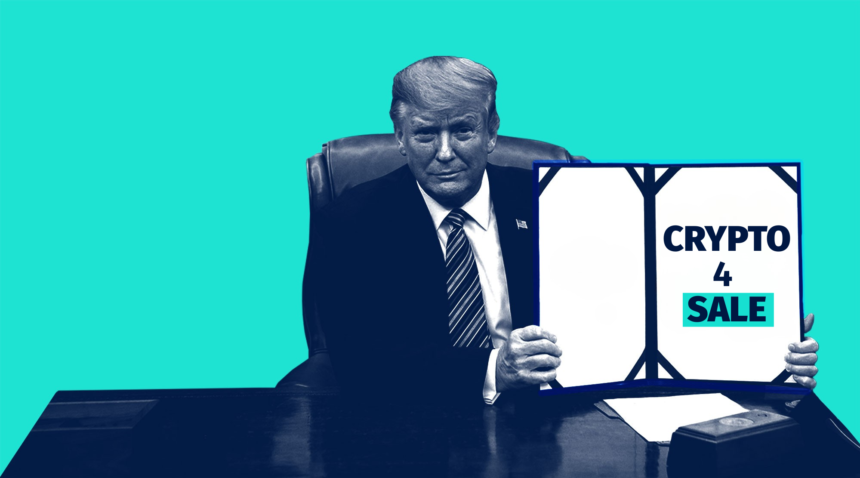
Donald Trump and his three sons are reportedly linked to a crypto venture, World Liberty Financial, which they co-founded in 2024 alongside billionaire Steve Witkoff, who currently serves as Trump’s special envoy for peace. The family’s stakes in the company are estimated to total around $1 billion. This venture has become significantly intertwined with Binance, a major cryptocurrency exchange that recently pleaded guilty to violations including anti-money laundering and sanctions breaches related to Iran.
The allure of World Liberty Financial is enhanced by backing from a fund supported by the United Arab Emirates (UAE). A particularly contentious detail emerged when it was disclosed that, just days before Trump took office, an entity affiliated with the deputy ruler of Abu Dhabi acquired a 49% stake in the venture, which funneled approximately $187 million to Trump’s family. This situation raises concerns over potential conflicts of interest regarding U.S. foreign policy, especially given Trump’s escalation against Iran.
Despite ongoing military actions and investigations into Binance’s compliance with sanctions, World Liberty Financial has sought to deepen its partnership with the exchange. Earlier this year, two promotional campaigns were announced that incentivized holders of USD1, the company’s stablecoin, to retain their funds on the Binance platform.
World Liberty Financial claims its mission is to capitalize on the visibility of the Trump brand, with Trump himself prominently featured in its marketing materials. The company promotes its decentralized approach, an ironic twist given Trump’s earlier skepticism toward cryptocurrency. Trump serves as a co-founder emeritus and a “chief crypto advocate,” while his sons hold significant roles within the organization, with Zach Witkoff serving as CEO.
Financial disclosures reveal that Trump maintains a substantial investment through DT Marks DEFI LLC, which has a near 38% stake in the core entity of World Liberty Financial. The LLC, which is partly owned by Trump family members, holds a staggering 22.5 billion $WLFI tokens. These tokens are positioned as a community governance tool rather than as ownership stakes in the company, complicating transparency regarding their distribution.
The financial success tied to World Liberty Financial has been noteworthy. Recent estimates place Trump’s earnings from the venture at $57.4 million within just its initial quarter, with projections suggesting he could net around $550 million from token sales by March 2026.
The relationship between World Liberty Financial and Binance is described as critical. Binance, without an official headquarters, has recently established a global presence in Abu Dhabi, coincidentally the same emirate that holds a significant stake in Trump’s crypto venture. This partnership blossomed after Binance provided software support for World Liberty Financial, amidst ongoing allegations of trading infractions and significant penalties from U.S. regulatory bodies.
Critically, Binance has been scrutinized for facilitating transactions associated with Iran, having transferred over $8 billion in trading activity despite existing sanctions. Recent reports suggest that Binance continues to aid Iranian entities in circumventing these sanctions, exacerbated by a cozy financial arrangement with the Trump family.
The geopolitical implications of this alliance cannot be understated. Four days prior to Trump’s inauguration, the substantial investment from UAE interests raised questions about potential violations of the Constitution’s Emoluments Clause, a stipulation designed to prevent federal officials from benefiting financially from foreign states without congressional approval. With the relationship between the Trump-led venture and the UAE surfacing amidst international tensions regarding Iran, the complexities of foreign influence on U.S. policy remain a stark concern.
Furthermore, World Liberty Financial’s operational framework is increasingly reliant on Binance, particularly following the introduction of USD1, the company’s stablecoin, which has positioned itself as one of the leading assets in its category, directly tied to Binance’s ecosystem. Meanwhile, despite ongoing investigations into the crypto exchange’s conduct, the Trump administration has notably eased regulatory scrutiny of the cryptocurrency industry.
As scrutiny rises over these entanglements, U.S. policymakers are left grappling with the profound implications of governance intertwined with private financial interests. The legal and ethical dilemmas surrounding foreign government partnerships with American political figures raise fundamental questions about accountability, transparency, and national integrity within an increasingly digital financial landscape.