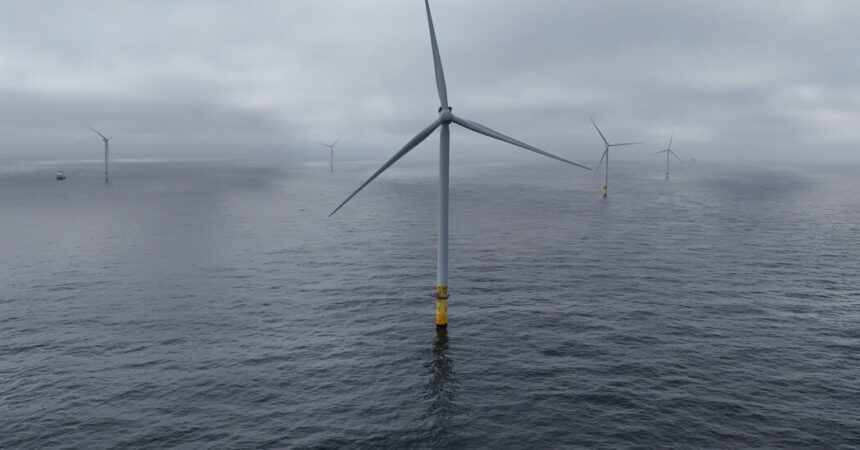
The Interior Department announced on Monday that the Trump administration will pay energy companies a substantial sum to abandon their plans for two offshore wind farms, marking a continuation of a controversial strategy employed recently to halt other similar projects. The energy firms involved will surrender their leases for these wind farms, one slated for development off the coast of New York and New Jersey and the other off California, in exchange for a total payment of $885 million — the amount they initially paid for the leases under the Biden administration.
In a striking twist, the companies have agreed to channel these funds into oil and gas projects, particularly focusing on liquefied natural gas facilities along the Gulf Coast. This move echoes a previous agreement made last month with the French energy giant TotalEnergies, which also forfeited leases for two wind projects off the coasts of New York and North Carolina, while committing to fossil fuel investments.
Critics have described these deals as extraordinary transfers of taxpayer dollars directed toward private companies to curtail the development of offshore wind energy, which the Biden administration views as a crucial component of clean energy strategy. Former President Trump has frequently criticized offshore wind, making unfounded claims about their inefficacy and impacts on marine life.
The government’s approach to this expanding offshore wind sector has oscillated, with attempts to impose restrictions on wind farm construction met with judicial challenges. In December, the Interior Department halted five wind farm projects off the East Coast, but courts subsequently overturned that decision. By negotiating directly with the developers to cancel their leases, the administration is attempting to sidestep potential legal conflicts.
The deals have significant implications for both Bluepoint Wind, in the early stages of development off New York and New Jersey, and Golden State Wind, located off California’s central coast. Both projects involved partnerships with Global Infrastructure Partners and Ocean Winds, a joint venture between Engie and EDP Renewables. Following this agreement, the companies have pledged not to pursue new offshore wind projects in the U.S., although this does not necessarily preclude other related ventures.
Michael Brown, CEO of Ocean Winds North America, emphasized the need for businesses to adapt to market changes when announcing the deal. He remarked on the importance of receiving refunds for lease payments to ensure a favorable outcome for shareholders. In contrast, some market analysts have noted a retreat from prior commitments to sustainability among major Wall Street firms, including BlackRock, which initially aimed to utilize its vast assets to combat climate change.
Comments from key figures in the government reveal a critical stance on the viability of wind leases. Interior Secretary Doug Burgum noted that incentives offered during the Biden administration, such as substantial tax credits for renewables, made those projects financially appealing, a situation that changed following cuts to such incentives by a Republican-controlled Congress.
New York Governor Kathy Hochul condemned the deal, labeling it as detrimental to the state’s energy ambitions and a setback to meeting emission reduction targets. She expressed concern over the administration’s attitudes toward renewable energy, which she views as an obstruction to job creation and energy needs.
Amid these developments, legal experts and congressional Democrats have voiced skepticism regarding the legality of the Interior Department’s use of taxpayer funds to facilitate company buyouts of legally secured leases, prompting calls for further transparency. The situation remains fluid, with questions raised about the actual commitment of the energy companies to invest in new fossil fuel infrastructure following the lease cancellations.