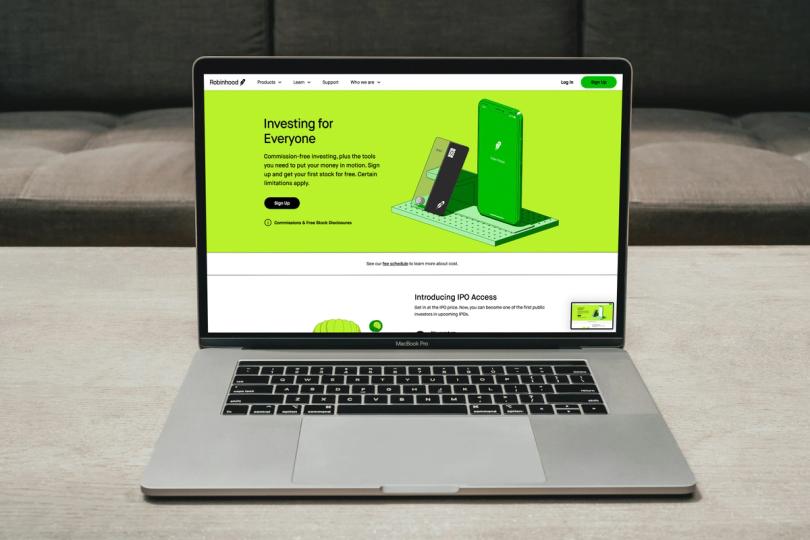
Robinhood has reported its first-quarter earnings, revealing a disappointing performance that fell short of expectations primarily due to a significant decline in crypto trading revenue. The trading platform recorded adjusted earnings per share of $0.38, which was slightly below Wall Street’s forecast of $0.39, as per FactSet data. Despite an overall rise in total revenue by 15% year-over-year to $1.07 billion, the figure did not meet analyst estimations of $1.14 billion.
A notable factor in this earnings miss was the 47% drop in crypto-related activities, which have been a substantial contributor to transaction-based revenue. This segment generated $134 million, down from $252 million in the same period last year. Following the announcement, Robinhood’s shares experienced an approximately 8% decline in after-hours trading.
The decrease in crypto trading revenue indicates a potential shift in customer activity, with retail traders appearing to move away from high-risk assets like cryptocurrencies. On the other hand, transaction-based revenue saw a modest increase, rising from $583 million to $623 million. A significant driver of this growth was event contracts, which have gained popularity among users. These contracts accounted for a notable portion of “other transaction revenue,” which surged by 320% year-over-year to reach $147 million. During this quarter, users traded a record 8.8 billion event contracts, reflecting an increased interest in prediction markets, where participants place bets on the outcomes of real-world events.
Robinhood’s earnings results underscore the company’s ongoing efforts to decrease its dependence on the volatile crypto market, aiming to stabilize its revenue streams. Alongside this strategy, the firm has been actively exploring new areas such as derivatives and prediction markets, similarly to its competitor Coinbase, which is scheduled to report its earnings on May 7. The trading platform also reported robust growth in net interest revenue and subscription services, including its Gold service, as it continues to expand its financial ecosystem.