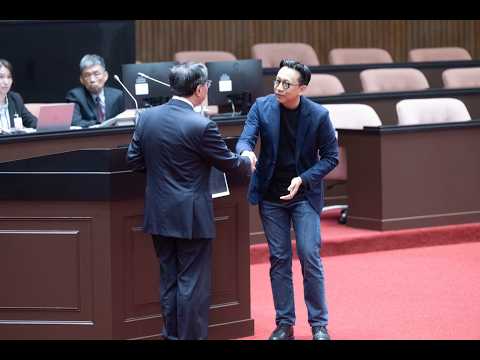
During a formal interpellation session at the Legislative Yuan, Taiwanese Legislator Dr. Ko Ju-Chun presented findings from the Bitcoin Policy Institute (BPI) that advocate for establishing a Bitcoin reserve for Taiwan. The report was delivered directly to Premier Cho Jung-tai and Central Bank of China (CBC) Governor Yang Chin-long, marking a significant moment in the ongoing policy discussions regarding digital assets in the country.
Dr. Ko urged the executive branch to consider allocating a portion of Taiwan’s substantial $602 billion in foreign exchange reserves to Bitcoin, identifying it as a potential strategic national asset. He further requested that the CBC prepare a comprehensive report on stablecoins and broader digital asset reserves within the next month.
The BPI report, authored by Fellow Jacob Langenkamp and released in March 2026, explores the geopolitical, economic, and trade rationale for Taiwan to include Bitcoin in its reserve strategy. The research reveals that over 80% of Taiwan’s reserves are currently held in U.S. dollar-denominated assets, creating vulnerabilities to both currency fluctuations and geopolitical instability. The report highlights unique advantages Bitcoin offers, especially in scenarios of blockades where traditional reserves could be compromised.
Commenting on the development, Sam Lyman, head of research at BPI, noted that the initiative reflects serious consideration by Taiwan’s lawmakers regarding Bitcoin as a strategic asset. Lyman emphasized the organization’s mission to educate the public on the benefits of Bitcoin, underlining the significance of Dr. Ko’s decision to address key government figures directly.
Langenkamp elaborated on Taiwan’s unique challenges, asserting that given the geopolitical landscape, Bitcoin could serve as an accessible alternative that is unhindered by physical transport issues typically associated with traditional assets like gold.
Dr. Ko, who is also the vice co-chair of the Legislative Yuan’s US-Taiwan Caucus and the founder of the Emerging Technology Exchange Association, first brought the report’s findings to the CBC Governor’s attention during a previous session in late March. The recent formal presentation to the premier represents a pivotal step in ongoing dialogue regarding the adoption of Bitcoin as a reserve asset.
Despite earlier assessments by the CBC in late 2025 that deemed Bitcoin unsuitable due to concerns over volatility and liquidity, the central bank has initiated a digital asset sandbox aimed at future experimentation, utilizing seized Bitcoin for testing purposes.
The full report, which details the geopolitical, economic, and trade implications of establishing a Bitcoin reserve for Taiwan, is accessible online, reflecting the BPI’s commitment to promoting informed discourse on Bitcoin and its role in modern finance.