Tesla’s most recent quarterly update presents a complex financial picture, exhibiting mixed results that have sparked significant interest among investors and analysts alike. While the company’s revenue dipped below expectations, its earnings surpassed forecasts, indicating potentially resilient profitability amid a challenging market landscape.
A key narrative emerging from this quarterly report is Tesla’s strategic pivot toward diversification beyond its traditional electric vehicle (EV) market. CEO Elon Musk revealed plans to significantly ramp up production of the company’s humanoid robot, Optimus, and make strides in its robotaxi initiative, leveraging advanced full self-driving (FSD) technology. This shift is accompanied by a promise of increased investments, hinting at a robust growth trajectory aimed at scaling these ambitious projects.
Musk emphasized: “We’re going to be substantially increasing our investments in the future, so you should expect to see a very significant increase in capital expenditures.” He elaborated that these investments will focus on enhancing core technologies, including battery systems, AI algorithms, and semiconductor design, all intended to prepare for a marked increase in manufacturing capabilities.
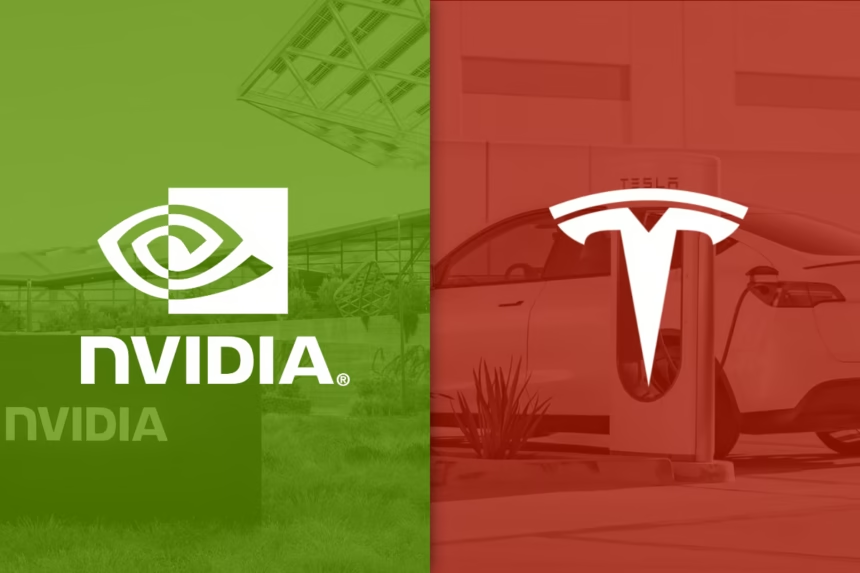
This strategic direction not only underscores Tesla’s commitment to innovation but also creates potential synergies with other tech leaders, particularly Nvidia. The company, recognized for its leadership in AI training platforms, stands to benefit significantly as Tesla ramps up its spending. While Tesla is developing its own AI chips, it also utilizes Nvidia’s technology for AI training, a dual strategy that has proven effective in balancing cost and performance. Musk previously noted, “Tesla is not looking to replace Nvidia,” signaling a collaborative rather than competitive relationship.
Looking ahead, Musk believes that this increased spending will unlock substantial revenue opportunities. The success of the Optimus robot, if manufactured cost-effectively and capable of performing various tasks, could disrupt labor markets and create new operational efficiencies. Additionally, the anticipated improvements in Tesla’s FSD software could bolster its robotaxi service, positioning it for a compelling revenue model.
Despite facing headwinds, such as sluggish EV sales in recent years—though there was a rebound in the first quarter—Musk is optimistic about Tesla’s long-term prospects. He cautioned investors to stay mindful of the inherent risks associated with high-stakes ventures like the Optimus and robotaxi projects. With Tesla’s share prices currently trading at a significant multiple of earnings, this valuation reflects both the company’s growth potential and the risks involved.
Meanwhile, Nvidia finds itself in a strong position amid this evolving landscape. The demand for its AI training chips is robust, and Tesla’s increased capital spending aligns with broader trends across the technology sector, as many companies step up their investment in AI technologies. Nvidia’s CEO, Jensen Huang, has indicated confidence in future sales projections, expecting substantial order growth through its upcoming AI chip offerings.
Analysts continue to see Nvidia as a compelling investment opportunity, with projections suggesting a notable upside potential from current price levels. Even as concerns about a potential downturn in the AI market circulate, Nvidia’s long-term outlook remains positive, supported by strong demand and continued growth in capital investment across various tech sectors.
In conclusion, Tesla’s shift toward ambitious technological investments positions not only itself but also allied companies like Nvidia for potential growth. As the EV leader navigates its future path amid evolving market dynamics, both firms appear poised to play pivotal roles in the ongoing AI and automation revolution. Investors attracted to this blend of risk and innovation should remain vigilant as developments unfold in the coming quarters.