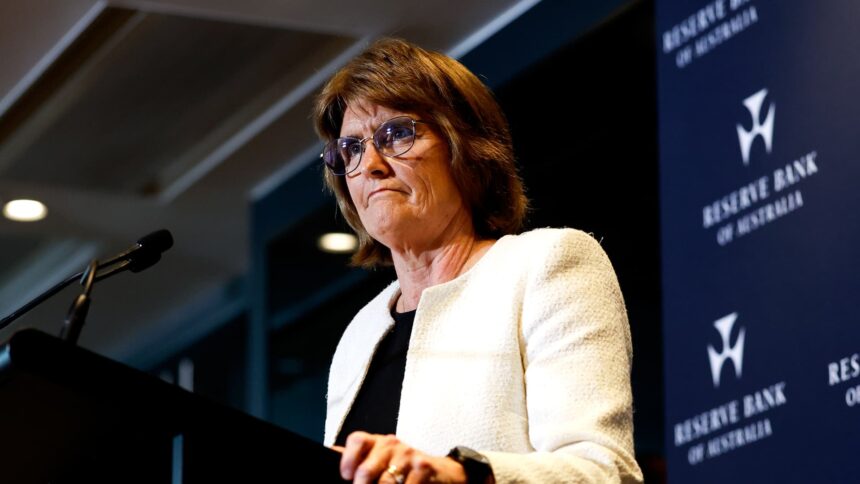
Michele Bullock, the governor of the Reserve Bank of Australia (RBA), addressed the media following a significant decision by the central bank on interest rates. On December 9, 2025, the RBA announced it would keep its key interest rate steady for the third consecutive meeting, a move that many economists had anticipated. This decision comes amid ongoing concerns regarding inflation and its implications for Australia’s economic landscape.
In a pivotal meeting earlier in the month, the RBA raised the policy rate to 4.35%, matching a peak previously set in December 2024. This adjustment is attributed to a notable rise in inflation, driven partly by geopolitical tensions in the Middle East that have led to increased fuel and commodity prices. According to the RBA’s statement, these developments are contributing to widespread inflationary pressures. The bank highlighted that the higher fuel prices are expected to have second-round effects on the cost of goods and services throughout the economy.
The board’s vote reflected a strong consensus, with eight members in favor of the rate hike, while one member preferred to maintain the rate at 4.1%. The RBA indicated that inflation is likely to remain above its target range of 2% to 3% for an extended period, noting that risks surrounding inflation remain heightened.
Looking ahead, the RBA signaled the possibility of further rate hikes. Its economic forecasts suggested that the policy rate could reach 4.7% by December 2026, surpassing previous projections made earlier in February. If rates go beyond 4.35%, it would mark the highest level since December 2011. In tandem, the RBA upgraded its inflation forecasts, predicting rates of 4.8% for the June quarter and 4% for the year concluding in 2026, up from earlier expectations of 4.2% and 3.6%, respectively. Meanwhile, the growth outlook for 2026 was revised down to 1.3% from a prior estimate of 1.8%.
ANZ Bank noted that the RBA’s messaging was “more hawkish than expected,” suggesting that while another rate increase is not guaranteed, the bank prefers to keep options open regarding future policy adjustments. The Australian economy demonstrated robust growth of 2.6% year-over-year in the fourth quarter, the fastest pace in two years, surpassing analysts’ estimates.
Recent inflation data underscored persistent price pressures, with consumer prices rising by 4.09% year-over-year in the first quarter—the steepest increase in over two years. March saw inflation spike to 4.6%, the highest since the country began publishing monthly Consumer Price Index data in 2025.
The RBA previously signaled during its March meeting that additional rate increases could be on the horizon, but there was a lack of consensus among policymakers regarding timing. As uncertainty surrounding developments in the Middle East persists, the RBA has cautioned that various scenarios could contribute to both global and domestic inflationary trends. Analysts, including Abhijit Surya from Capital Economics, anticipate the RBA will raise rates to 4.60% during the third quarter, given the potential for inflation data to exceed current expectations.