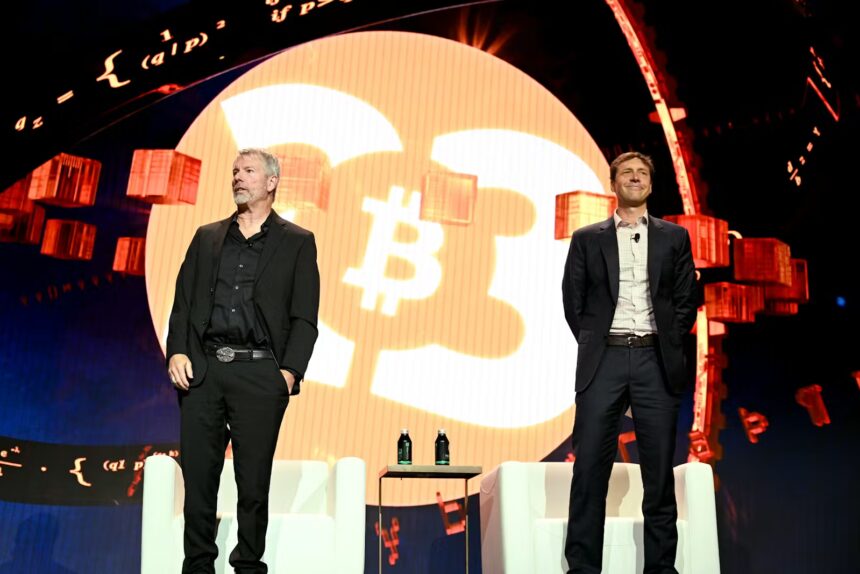
Bitcoin’s upward trajectory has captured significant attention, surging to $82,700 early Wednesday morning, largely attributed to advancing discussions regarding a potential agreement between the United States and Iran. Tim Sun, a senior researcher at Hashkey, provided insights to Sherwood News, highlighting that while the easing of tensions in Iran contributes to this rally, improved liquidity on a macro level plays a crucial role.
Sun observed that capital expenditures from U.S. AI cloud providers are on the rise, paired with robust earnings reported by several technology corporations, both of which are fueling a heightened risk appetite in the market. Despite these positive signals, Sun pointed out that indicators from the derivatives market do not mirror the same level of confidence. He noted a lack of enthusiasm from institutional investors to pursue long positions in the futures market, with demand for downside protection remaining strong.
In discussing market dynamics, Sun revealed that the “Max Pain” point in the options market is currently set at $84,000, while a substantial concentration of long orders is situated between $78,000 and $79,000. He explained that while capital has been maintaining Bitcoin’s price around $81,000, it is doing so at a cost of hedging, suggesting that investors are somewhat wary of significant price increases.
Looking ahead, Sun indicated the likelihood of volatile price movements between $78,000 and $84,000 rather than a straightforward breakout. He identified three critical factors investors should monitor: the ability of Bitcoin ETFs to sustain strong net inflows, the consistent growth of CME futures positions, and the performance of the U.S. Dollar Index.
Bitcoin ETFs are currently experiencing a positive trend, enjoying inflows for four consecutive days, with the first two days of the week alone raking in nearly $1 billion, according to SoSoValue. Analysts at Bitfinex are keeping an eye on crucial technical levels, suggesting a daily close above $84,766 could confirm further bullish momentum, while a downturn below $78,000 might lead to more caution.
The recent market movements appear to stem from assertive institutional buying, which has outpaced new supply by a significant margin—estimated at nearly three to six times higher. This surge suggests that the current rally is not simply a temporary spike but indicates a potential shift in market sentiment, effectively diminishing bearish outlooks.
Compounding the developments, Michael Saylor, a prominent figure advocating for Bitcoin retention, announced during a recent earnings call that his company, Strategy, the largest corporate Bitcoin holder with 818,334 Bitcoins, may consider selling some of its holdings for the first time. This move, intended to fund dividends, aims to communicate stability within the company and the broader market, contradicting skeptics who may doubt its financial resilience.
With this intricate web of factors influencing Bitcoin’s current status, the market continues to navigate an environment of both optimism and caution, making the upcoming weeks critical for potential investors and stakeholders.