In a year marked by unprecedented growth, Wall Street has witnessed record-breaking performances across major indices. The S&P 500, Nasdaq Composite, and Dow Jones Industrial Average have all achieved record closing highs, with significant milestones set at 7,200, 25,000, and 50,000, respectively. However, concerns are mounting about the sustainability of these gains as a critical change looms at the Federal Reserve.
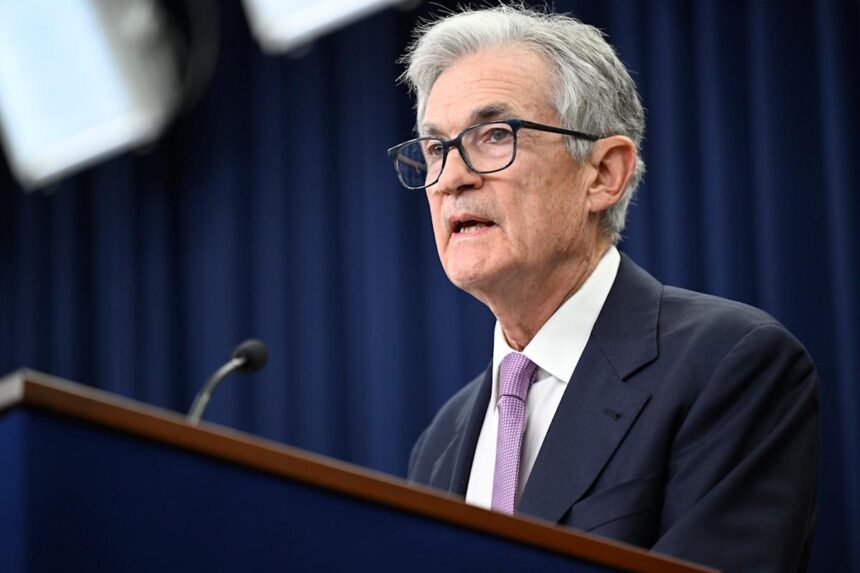
Jerome Powell’s tenure as Fed Chair is set to conclude on May 15, marking a pivotal moment for U.S. monetary policy. Nominated by former President Donald Trump, Powell’s potential successors are under scrutiny in light of the president’s public criticism of the Federal Open Market Committee’s (FOMC) approach to interest rates. Trump has repeatedly called for aggressive rate cuts, aiming for levels around 1% or lower.
Powell has maintained a different perspective, asserting that data-driven decisions remain central to FOMC policies. He has cited external factors—including Trump’s tariffs and geopolitical tensions—as obstacles to easing rates, responding to inflation concerns.
The spotlight now shifts to Kevin Warsh, Trump’s nominee to replace Powell, who is on the brink of Senate confirmation. Warsh has a significant background, having previously served on the FOMC during the critical years surrounding the 2008 financial crisis. While his experience is seen as a potential asset, concerns are rising regarding his hawkish stance on interest rates. Historically, Warsh favored rate hikes even amidst high unemployment during the Great Recession, indicating a reluctance to adopt policies that might foster loose monetary conditions.
Compounding these worries, Warsh has publicly criticized the expansion of the Fed’s balance sheet under Powell, advocating for a reduction in assets held by the central bank. Such a strategy could lead to a decline in bond prices, resulting in increased borrowing costs due to the inverse relationship between bond prices and yields. This scenario raises apprehensions about the potential impact on economic growth if interest rates rise instead of falling.
Currently, the stock market is reflecting a hefty premium, with valuations nearing levels not seen since the dot-com bubble. The expectation that rates will lower in the near future has been integral to the market’s upward trajectory. Yet, with the prospect of continued inflation and a hawkish Fed under Warsh, analysts warn that rate cuts may be unlikely, and instead, future rate hikes could be more probable.
The implications of this impending shift at the Fed could carry significant consequences for the stock market. As investors weigh their options, some are questioning whether now is the right time to invest in the S&P 500 Index. Insights from analysts suggest potential alternatives, highlighting ten stocks poised for substantial returns that may outperform the major indices.
As this pivotal transition approaches, the financial landscape remains charged with uncertainty, leaving investors to contemplate the future direction of the markets amidst evolving monetary policies.