Blue Cross Blue Shield of Michigan has issued a warning to approximately 250,000 patients who may experience significant changes in their healthcare coverage if a new contract with the University of Michigan Health is not finalized by June 30. The state’s leading nonprofit health insurer has advised patients to consider seeking new doctors amidst ongoing negotiations.
Despite the potential disruption, around 48,000 patients suffering from serious, life-threatening conditions will continue to receive in-network care at Michigan Medicine facilities until September 29, even if an agreement is not reached. These conditions include critical health issues such as cancer, organ transplants, pregnancies, diabetes, autoimmune disorders, and Alzheimer’s disease.
Meghan O’Brien, Director of Corporate Affairs at BCBSM, voiced her disappointment regarding the negotiation process. She mentioned that Michigan Medicine could have continued their in-network status post-deadline under better terms but chose to send a termination notice instead. “We’re working diligently to try to reach an agreement by June 30,” O’Brien stated.
Michigan Medicine, on the other hand, confirmed its plans to terminate its in-network partnership with Blue Cross effective July 1 if negotiations do not yield results. This termination will specifically impact facilities and providers located in southeastern Michigan. Julie Ishak, Chief Nurse and Operations Executive for Michigan Medicine, expressed frustration over the negotiation process, stating that multiple proposals have been submitted to Blue Cross since March 1 but did not receive comparable adjustments in response.
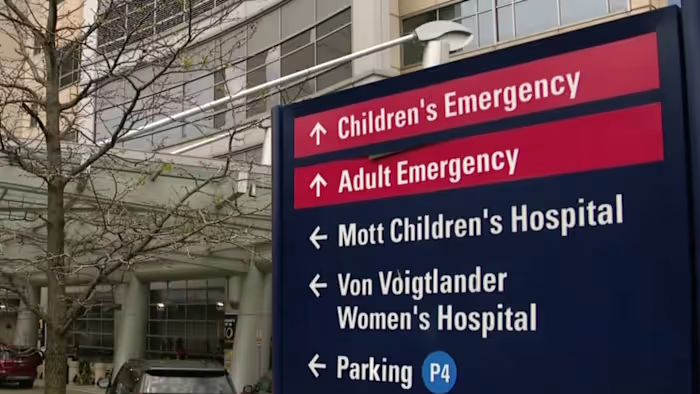
The ongoing dispute has left many patients and families anxious about their healthcare options. For instance, the story of Samir and Courtney Abdel-Hak illustrates the concern faced by families whose children rely on specialized care. Their son Amir was diagnosed with Type 1 diabetes last November, and they credit the care received at C.S. Mott Children’s Hospital for significant improvements in his condition. The Abdel-Haks emphasize the importance of the comprehensive care Amir receives, which includes a team of specialists working together.
Courtney expressed her desire for a resolution, advocating for negotiations that prioritize patient needs over financial considerations. “We’re patients. That’s a little boy. He’s relying on that to stay alive,” she stated.
Both BCBSM and Michigan Medicine continue to discuss potential solutions in hopes of averting a breakdown in coverage. Ishak reassured families like the Abdel-Haks that they remain committed to working toward a resolution that will allow continued access to essential medical services for all patients involved.