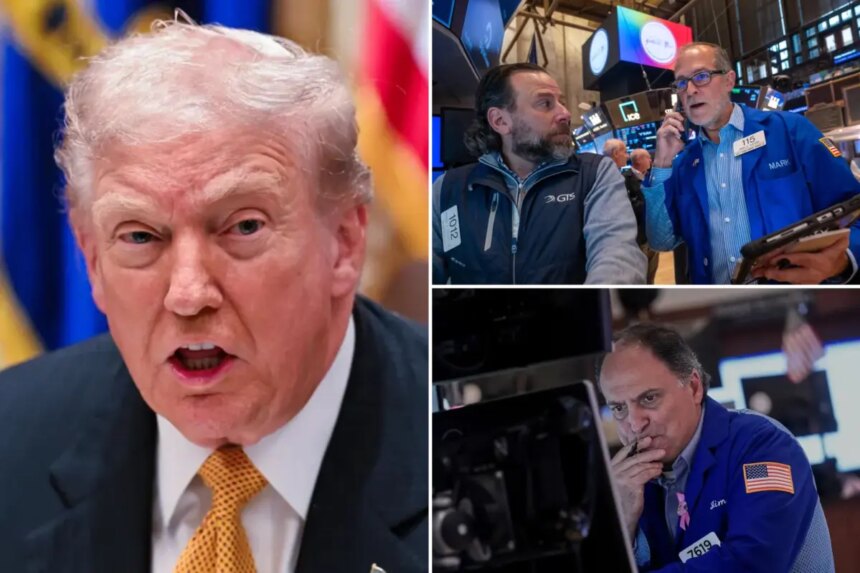
Market turmoil gripped Wall Street on Friday as consumer sentiment plummeted to near-record lows, sending shockwaves through the tech sector and prompting a significant sell-off. The Nasdaq Composite fell by 0.2%, marking a weekly decline of 3%, its steepest drop since the market reaction to President Trump’s “Liberation Day” tariffs in April.
Data from the University of Michigan revealed that consumer sentiment sank to 50.3, a 6.2% decrease from the previous month and a staggering 30% drop year-over-year. This marks the lowest level recorded in over three years, exacerbated by the ongoing government shutdown, now entering its 38th day. Alongside the shutdown, inflationary pressures have weighed heavily on consumers, with price increases affecting everyday items from groceries to household goods.
Joanne Hsu, director of the University of Michigan survey, pointed to the multifaceted financial pressures facing consumers. “Consumers perceive pressure on their personal finances from multiple directions,” she remarked, noting pessimism about future job markets.
The tech sector, typically a market leader, faced a fierce backlash as fears of overvaluation spread, reminiscent of the dot-com bubble. Prominent companies such as Microsoft, Nvidia, AMD, Palantir, Oracle, and Meta collectively saw about $1 trillion in market value evaporate. Notably, the biggest loser in the S&P 500 this week was Super Micro Computer, which plummeted approximately 25%.
The downturn in tech stocks began earlier in the week following Palantir’s earnings report, which, despite favorable figures, raised eyebrows over its valuation. Investor Michael Burry’s announcement of a short position in Palantir intensified scrutiny. CEO Alex Karp criticized short selling as “market manipulation,” but the company’s stock still faced a substantial decline over the week.
Adding fuel to the fire, Nvidia CEO Jensen Huang’s comments about the United States potentially losing the artificial intelligence race to China stirred investor concerns about the sustainability of AI investments. Although he later attempted to clarify that the U.S. remained competitive, the initial remarks sparked a wave of unease among investors.
While the Nasdaq struggled, the Dow Jones Industrial Average and S&P 500 managed to edge slightly higher on Friday, with the Dow gaining approximately 75 points and the S&P rising around 0.1%. Amid this backdrop, Trump publicly praised the technological advancements in AI, dismissing concerns about a potential bubble, claiming that the U.S. is leading the global charge.
Some tech giants, while not entirely shielded from the week’s woes, reported smaller declines. Alphabet’s stock fell less than 1%, and Apple appeared set to finish the week nearly flat.
As weekend markets approach, investors will be watching closely for further developments in both consumer sentiment and the tech sector’s trajectory, amidst ongoing economic turbulence.