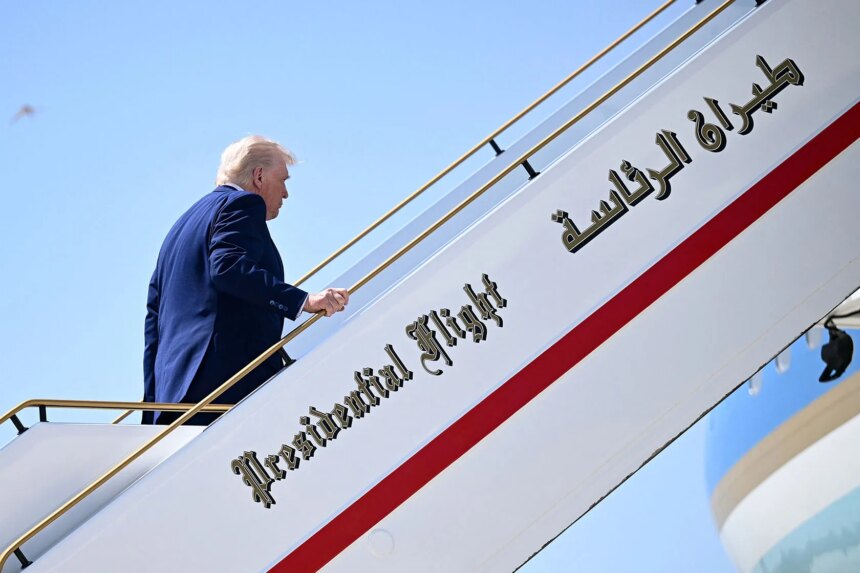
As Donald Trump embarks on his 2024 campaign, his stance on cryptocurrency has dramatically shifted. Just five years prior, Trump was openly critical of the crypto market, branding it as a “potentially disastrous” scheme. However, he has since rebranded his position, pledging to transform the United States into “the crypto capital of the planet.” This pivot raises eyebrows as newly enacted policies seemingly favor the cryptocurrency industry, despite underlying concerns about self-enrichment.
Reports have surfaced detailing substantial financial ties between the Trump family and influential foreign entities. A notable development emerged when Sheikh Tahnoon bin Zayed Al Nahyan, a senior member of the Abu Dhabi royal family and a pivotal security official in the UAE, invested $500 million in a Trump-backed cryptocurrency venture called World Liberty Financial (WLF). This investment coincided suspiciously with a U.S. deal that granted the UAE access to advanced computer chips, igniting speculation regarding the ethical implications of such a financial arrangement.
The timing of Sheikh Tahnoon’s investment raised significant questions. Days before Trump’s anticipated second inauguration on January 16, 2025, his venture saw an infusion of $187 million from the UAE. This agreement not only positioned Sheikh Tahnoon as the largest shareholder in WLF, but it also facilitated potential future financial opportunities between Emirati entities and the Trump family. Given Sheikh Tahnoon’s prominence, concerns have arisen regarding whether Trump’s economic dealings with foreign nationals compromise U.S. national security.
In May 2025, WLF announced that its newly introduced stablecoin, USD1, would serve as the primary currency for a $2 billion investment in Binance, a major crypto exchange owned by the Emirati state. This transaction underscored the financial interdependence between Trump’s cryptocurrency ventures and the UAE, creating substantial profit margins for the Trump family through transactional fees associated with USD1.
Concurrently, the Trump administration enacted significant changes to AI export regulations, loosening restrictions that had previously safeguarded U.S. technology. The abrupt dismantling of these controls—initially designed to prevent high-end technology from reaching countries like the UAE—allowed for the sale of advanced chips, raising concerns about potential implications for national security. The UAE, particularly given its ties with China, posed a risk in the context of technology leaks and espionage.
Moreover, the new trade agreements stipulated that 20 percent of the AI chips—approximately 100,000 units—were designated for G42, an Emirati firm with connections to the Chinese military. This aspect of the deal, coupled with a $1.4 billion arms sale to the UAE, has drawn scrutiny and criticism from various congressional committees, concerned about the intertwining of Trump’s economic interests and U.S. foreign policy.
Critics argue that Trump’s dual role as President and a stakeholder in several lucrative ventures violates ethical norms traditionally upheld by previous administrations. Trump claims that federal conflict-of-interest laws are inapplicable to him, asserting that control over his financial interests rests with his children. However, this arrangement has led many observers to assert that there is insufficient separation between his personal profit and official policymaking.
As public scrutiny intensifies, many are left to contemplate whether Trump’s policy decisions genuinely serve U.S. interests or are primarily motivated by personal financial gain. With ongoing patterns of strong financial ties with foreign powers, questions arise concerning the integrity of U.S. foreign policy under his administration. Such developments illustrate a growing concern that political influence may be increasingly tied to financial transactions, undermining the nation’s security and strategic interests.