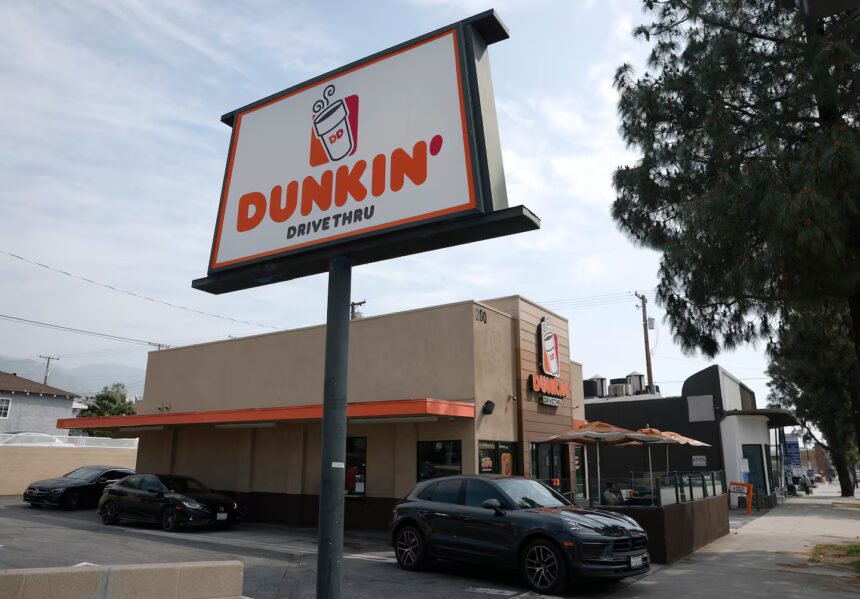
In a significant development for coffee and doughnut enthusiasts, Inspire Brands is gearing up for the potential initial public offering (IPO) of Dunkin’, although specific details remain sparse. The exact date for the IPO has yet to be announced, nor has the company disclosed the anticipated share price or stock ticker symbol. Historically, companies usually go public within six to twelve months after filing with the Securities and Exchange Commission (SEC), suggesting that shareholders might have to wait a while longer before the Dunkin’ shares become available.
Navigating the IPO landscape can be complex. Inspire will enlist a group of Wall Street investment banks to oversee the process and distribute shares, which are typically allotted to major institutional investors and wealthy clients. However, retail brokerages such as Fidelity, Robinhood, and Charles Schwab sometimes have access to IPO shares for their customers, offering an opportunity for individual investors to partake.
Dunkin’ has undergone a tumultuous history when it comes to public ownership. It originally went public in 1968, before being sold to the British conglomerate Allied-Lyons in 1990 for $325 million. In 2005, the chain was acquired by three private equity firms for $2.4 billion, only to return to public markets in 2011. Years later, in 2020, Inspire and Roark Capital purchased Dunkin’ for a hefty $8.8 billion, along with assuming $2.5 billion in debt, culminating in what will be Dunkin’s third IPO in its nearly 80-year timeline.
Dunkin’ recently experienced a surge in visibility and popularity, particularly following a Super Bowl advertisement featuring Ben Affleck and the introduction of new products like “dirty sodas.” However, the initial filing with the SEC was made confidentially, a practice allowed since 2012 that offers companies the chance to address potential regulatory concerns behind the scenes. Before shares can be publicly offered, Inspire must file an updated registration statement. This forthcoming document will reveal essential details, including expansion strategies, executive compensation, and multiple years of financial performance.
Inspire previously reported that Dunkin’ achieved sales of $14.5 billion last year from over 14,000 locations across 39 countries, a notable increase from $9.2 billion across 9,100 locations in 2019, the year preceding its acquisition. While sales trajectory appears promising, the reason behind selling shares lies in a strategic move to alleviate some of the debt incurred from the original acquisition.
The current IPO climate is seeing renewed activity after a few sluggish years, with 55 companies in the U.S. raising $18 billion by going public this year alone, while an additional 89 firms are gearing up for similar moves.
Concerns linger among loyal customers regarding whether Dunkin’ will fare better as a private or public entity. Under private ownership, firms occasionally enforce drastic cost-cutting measures, which may deter investors. In contrast, public companies experience the pressure of quarterly financial reporting and market scrutiny, where even minor missteps can adversely affect stock prices.
Throughout its storied existence, Dunkin’ has often faced criticism over perceived dips in quality following changes in ownership. Most recently, Health Secretary Robert F. Kennedy Jr. criticized the chain for its high sugar content in beverages. As Dunkin’ pivots towards a new chapter, the broader implications of its upcoming IPO will surely fuel discussion among investors, stakeholders, and consumers alike.
As anticipation builds surrounding Dunkin’s IPO, the chain’s future in the public domain raises several questions—will it enhance or dilute the quintessential Dunkin’ experience that has captivated audiences for decades? Stakeholders and fans alike will be keeping a close eye on developments in the coming months.