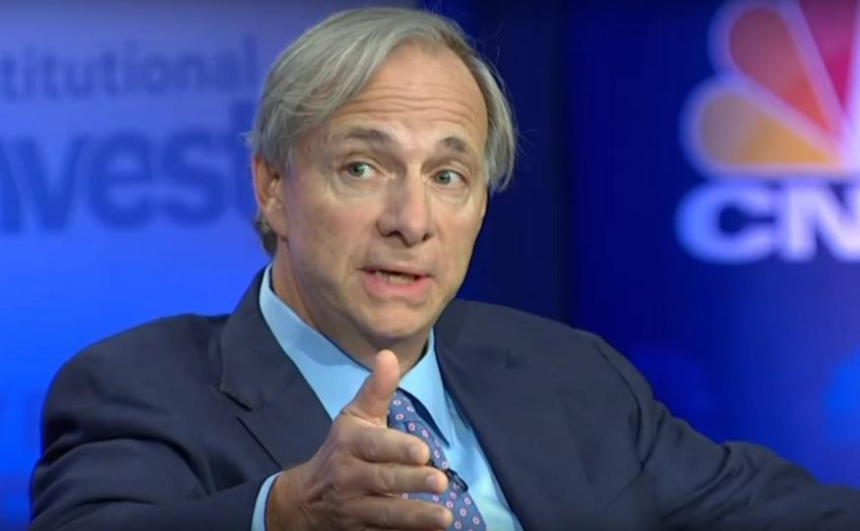
Bitcoin, once celebrated for its transparency, faces scrutiny from financial leaders regarding its viability as a reserve asset for central banks. Ray Dalio, a prominent billionaire hedge fund manager and bitcoin investor, recently expressed concerns on social media about Bitcoin’s lack of privacy, suggesting this transparency might be a significant barrier for central banks considering it as a reserve asset. Despite the growing interest from corporations and institutional investors, central banks remain hesitant.
Dalio noted that Bitcoin’s transactions can be monitored and potentially controlled, which diminishes its appeal to central banks that require confidentiality in their operations. He has previously indicated that he allocates around 1% of his portfolio to Bitcoin.
Operating on its decentralized peer-to-peer network, Bitcoin records every transaction on a public ledger, ensuring high transparency. This feature allows anyone to monitor transactions in real-time by using a Bitcoin block explorer to view the entire transaction history of any wallet address. Although wallet addresses offer a degree of pseudonymity, blockchain analytics and law enforcement agencies frequently have the means to trace funds back to individuals or organizations, raising concerns about privacy.
This level of visibility, while appreciated by many Bitcoin supporters, could deter central banks from accumulating an asset tracked so closely. Additionally, institutional participants have expressed that for broader adoption of blockchain technology, especially for larger transactions, enhanced privacy features are essential. The rising demand for privacy has been evident; for instance, the privacy-centric coin Zcash (ZEC) has seen over an 800% increase since early 2025, while Bitcoin has experienced a drop of more than 10% during the same time frame.
Dalio’s apprehensions extend beyond central bank adoption to the inherent structural issues that challenge Bitcoin’s status as a reserve asset in comparison to traditional assets like gold. One primary concern is Bitcoin’s correlation with Wall Street, specifically its tendency to mirror movements in technology stocks rather than functioning as a distinct store of value during turbulent financial periods. Current data shows a 90-day correlation coefficient of 0.89 between Bitcoin and the Nasdaq, indicating that roughly 79% of Bitcoin’s price fluctuations can be attributed to its relationship with the tech-heavy index.
Moreover, Dalio highlighted the comparatively small size and flexible nature of the Bitcoin market, which makes it more susceptible to manipulation. In contrast, gold enjoys a well-established status, is widely held, and operates independently of any singular digital framework. He underscored that gold would likely continue to be favored over Bitcoin as a robust reserve asset due to its entrenched role in the global financial system, despite Bitcoin’s increasing institutional interest.
Dalio’s preference for gold, articulated on multiple occasions, has drawn attention from crypto experts, who advocate for Bitcoin but face substantial challenges in shifting perceptions among traditional financial players.