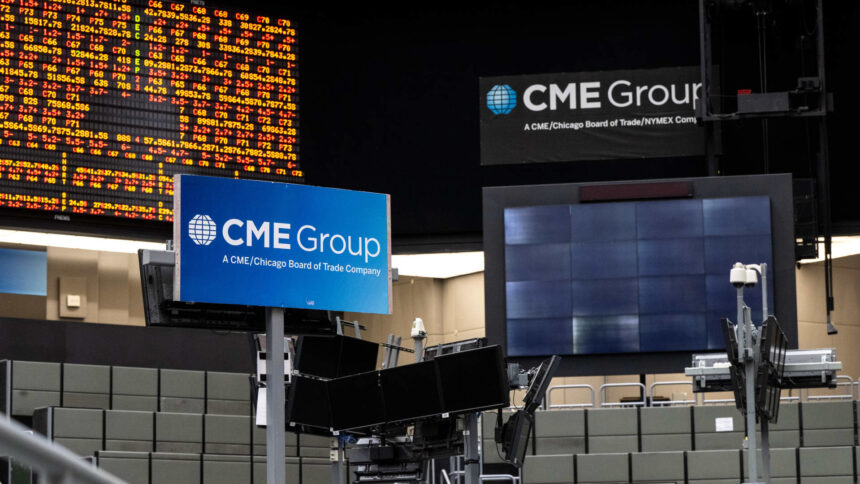
A groundbreaking initiative is on the horizon as CME Group prepares to launch a new futures market specifically tailored for semiconductors. This innovative market aims to provide traders with tools to hedge their investments in artificial intelligence (AI) amid the rising costs associated with computing power. The futures contracts will leverage graphics processing units (GPU) price indexes provided by Silicon Data, though the initiative is still awaiting regulatory approval.
The new “compute futures market” is designed to allow investors to lock in pricing for computing capacity based on a standardized GPU benchmark. This financial product will be particularly beneficial for those dealing with increasing GPU rental rates, a significant factor in the operational costs tied to the extensive growth of AI technologies. Carmen Li, the CEO of Silicon Data, emphasized the importance of creating standardized reference pricing in GPU markets which have historically lacked such frameworks. According to Li, the compute futures will equip AI developers, cloud service providers, and investors with more dependable tools for valuation and long-term planning.
Traditionally, futures markets have been associated with basic commodities like food, metals, and energy products, but they have expanded into advanced industrial sectors, particularly as technologies like AI continue to evolve. A historical parallel can be drawn to the late 1990s broadband boom, where Enron’s broadband services division attempted to sell unused networking capacity before its notable collapse.
Silicon Data specializes in offering access to specialized price indexes for semiconductors, akin to conventional economic indicators like the consumer price index. Their portfolio includes both a standardized GPU price index and a RAM index, along with forecasts for GPU rental prices.
Market sentiment suggests that demand for GPUs and central processing units (CPUs) will remain robust. Morgan Stanley analyst Shawn Kim commented on the emerging landscape of AI technologies, illustrating that the future architecture of AI systems will see a combination of GPU racks for complex model computations and CPU racks for orchestration and data processing.
The surge in demand for memory chips aligns with the ongoing AI boom, resulting in increased capital expenditure across major tech firms known as hyperscalers. Yet, this demand has sparked concerns about potential supply bottlenecks, which could intensify input costs for manufacturers. Memory chip producers are predicting significant profit margins for the remainder of the year and into the next, reflecting the soaring valuations within this niche industry.
This innovative futures market aims to reshape the landscape for AI investors and is poised to be a pivotal development for the semiconductor sector as it embraces standardization and stability amid a rapidly changing technological environment.