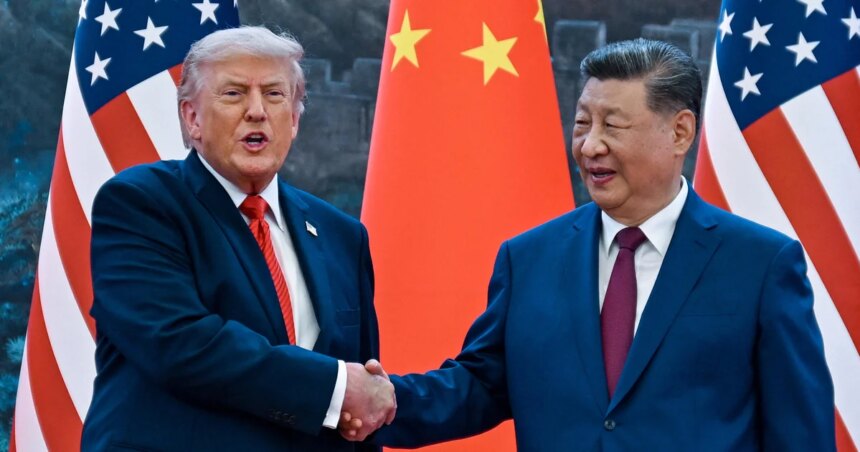
A recent summit between President Trump and Chinese President Xi Jinping aimed to alleviate ongoing economic tensions, but experts suggest no significant trade breakthroughs were achieved. Wendy Cutler, a former U.S. trade negotiator, expressed disappointment in the lack of announcements regarding substantial purchases of U.S. agricultural and energy products. Despite President Trump characterizing the meeting as yielding “fantastic trade deals,” many analysts remain skeptical about the outcomes.
David Meale, head of the China practice at the Eurasia Group, noted that while both sides claim progress, the absence of detailed agreements indicates that actual resolutions are still pending. He emphasized that it’s too early to declare the meeting a failure, as negotiations may still be in progress.
One potential beneficiary of the discussions appears to be Boeing. President Trump announced a commitment from China to purchase at least 200 aircraft, with possibilities for that number to rise to 750 in the future. Boeing welcomed the news, believing it had successfully reopened the Chinese market for aircraft orders. However, initial orders disappointed some market analysts, with Boeing shares dropping by 3.8% following the announcement.
In addition to aircraft, Trump mentioned that China would be increasing its purchases of U.S. oil and agricultural products, including “billions of dollars of soybeans.” A White House official claimed that key agricultural agreements were made during the trip, which are expected to enhance U.S. farmers’ exports and support American manufacturing jobs. However, specifics of these agreements remain unclear.
Experts in energy and trade have expressed caution regarding the so-called commitments made by China, noting that they lack binding agreements. Erica Downs, a senior research scholar at Columbia University, pointed out that without concrete details on oil purchases, the commitments remain verbal and may not translate into actual transactions.
Trade analysts like Cutler were also anticipating more detailed agreements related to various U.S. agricultural products, including corn and beef. Despite the lack of enforceable commitments, many believe that further discussions could lead to concrete agreements in the coming weeks or months.
The summit emphasized the importance of preventing further deterioration in the U.S.-China relationship, which has been strained since the implementation of significant tariffs by the U.S. last year. The formation of a “Board of Trade” is intended to manage trade disputes and may serve as a framework for future negotiations. However, this board’s ability to address issues is limited given that proposed tariff relief covers only a fraction of total trade.
Despite the challenges, the discussions signify a willingness from both nations to engage constructively. Trade experts advocate for patience in the negotiation process, suggesting that both sides may take time to finalize agreements rather than rush to announcements that could lack substance.