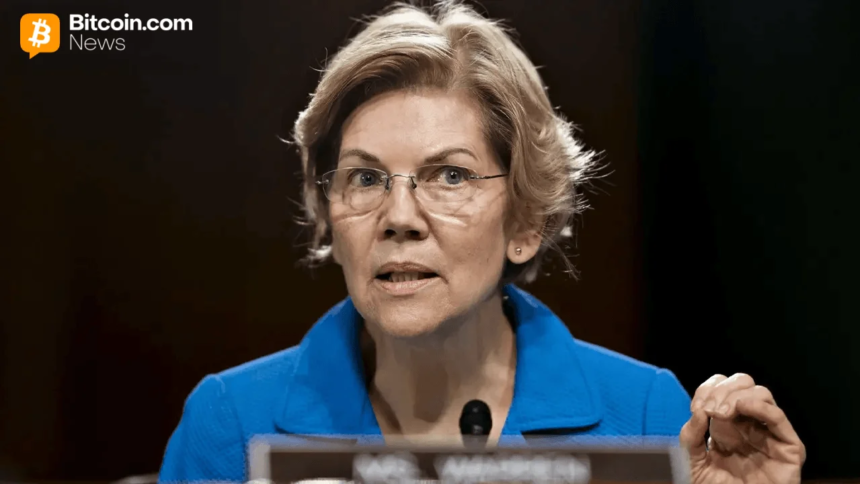
Senator Elizabeth Warren has formally addressed the Office of the Comptroller of the Currency (OCC) regarding its approval of nine crypto trust charters, including those for prominent firms such as Coinbase and Ripple. In a letter dated May 18, 2026, Warren argues that these approvals violate the National Bank Act by allowing companies to engage in non-fiduciary activities—like staking, lending, and stablecoin issuance—contrary to traditional trust operations.
Warren emphasized that national trust companies are confined to fiduciary duties such as acting as trustees or guardians, and are not authorized to accept deposits or provide loans. These firms operate without the federal deposit insurance or the regulatory frameworks that govern full-service national banks, which are designed to safeguard consumers.
Citing nine specific companies that have received charters—such as Ripple National Trust Bank, Paxos Trust Company, and Fidelity Digital Asset Services—Warren pointed to evidence within their business plans that she believes clearly exceed the boundaries of permissible activities. For instance, Coinbase’s application outlines plans to offer staking, financing, and trading services, which Warren asserts do not conform to the statutory definition of fiduciary trust operations. She described the situation as one of regulatory arbitrage, wherein these companies seek to gain bank-like privileges while eluding the necessary consumer protections.
Warren’s letter raises concerns that allowing these national trust companies to act similarly to full-service banks—while exempt from the associated restrictions—poses significant risks to consumers and undermines the integrity of the banking system. She specifically cautioned that this could lead to increased conflicts of interest and compromise the separation of banking and commerce.
Moreover, Warren referenced the GENIUS Act, the stablecoin legislation enacted in 2025, indicating that some of the charter applicants might be improperly structuring their businesses in relation to this new law. She argues that the GENIUS Act has not altered the provisions of the National Bank Act concerning trust charters and that any interpretation suggesting otherwise is a misreading of the statute.
In her letter, Warren requested comprehensive documentation from the OCC, including full charter applications, legal analyses, and details regarding the interplay between the GENIUS Act and the National Bank Act. Notably, she has also asked for all communications between OCC officials and members of the Trump family concerning the nine charter approvals, highlighting a politically sensitive aspect of her inquiry.
The OCC has maintained that its limited-purpose trust charters adhere to its regulatory authority for custody, settlement, and digital asset services, referencing prior interpretive letters. Recent rules finalized in March 2026 further broaden the scope of activities that these trust companies can engage in, a move Warren contests as an unwarranted expansion of power.
As a long-time critic of the merging of cryptocurrency and traditional banking, Warren cited significant risks associated with the crypto market, such as volatility and the failure of firms like FTX and Silvergate. The OCC is expected to respond to her inquiries by June 1, 2026, and the nature of that response could influence the trajectory of congressional oversight related to crypto banking practices.