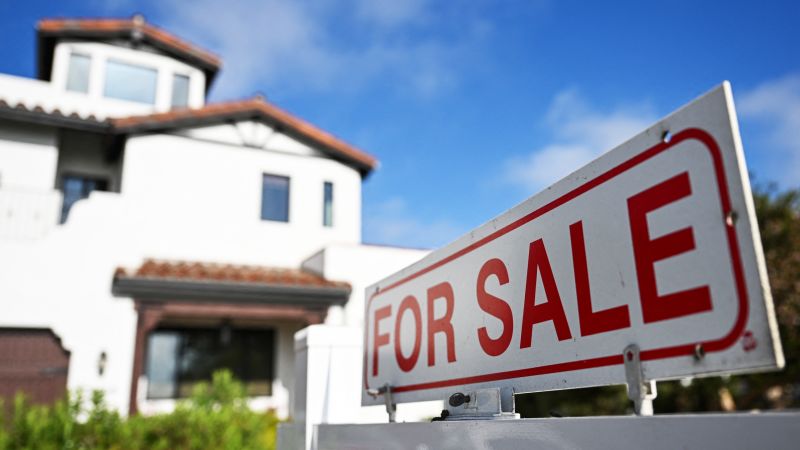
Recent turmoil in the bond market, exacerbated by escalating tensions from the ongoing war with Iran, has resulted in rising mortgage rates in the United States, raising concerns that the prospect of homeownership will become prohibitively expensive for many buyers.
According to Freddie Mac, the average 30-year fixed-rate mortgage climbed to 6.51% this week, marking the highest level observed since August of the previous year. This increase represents the most significant weekly jump in mortgage rates since April 2025, a period that also saw upheaval in the bond market following substantial tariff announcements by former President Donald Trump.
Mortgage rates tend to move in accordance with the US 10-year Treasury yield, which is closely linked to inflation expectations. This week, the yield surged to its highest rate in over a year amidst investor concerns that rising oil prices and the conflict in Iran could trigger sustained inflation. Recent data from the Consumer Price Index revealed inflation rising by 3.8% in April, the steepest increase since May 2023, underscoring worries that, for the first time in three years, American wages failed to keep pace with inflation.
Prior to the outbreak of hostilities in Iran, mortgage rates had dipped below 6% for the first time in over three years. Buyers who secured mortgages during that period stand to benefit significantly compared to those entering the market now. For instance, on a $450,000 home with a 30-year fixed mortgage rate of 5.98%—the average at the end of February—monthly payments would approximate $2,154 with a 20% down payment. In contrast, at the current average rate, those payments would rise to approximately $2,278, equating to an additional $1,488 annually, or over $44,640 over the loan’s lifetime.
Although present rates remain lower than those seen at the same time last year—when the 30-year mortgage averaged 6.86%—the anticipated decline following three recent cuts to interest rates by the Federal Reserve has not materialized as some economists had expected.
The impact of rising borrowing costs and economic uncertainty due to the conflict in the Middle East is increasingly evident in the housing market, with early indicators suggesting a sluggish start to the typical spring homebuying season, a period generally characterized by increased sales activity. Data from the Mortgage Bankers Association indicated a 2.4% year-over-year decrease in mortgage applications for new home purchases in April, with applications plummeting by 10% from March 2026.
This decline in applications is translating into fewer home sales. The National Association of Realtors reported that existing home sales only increased by 0.2% from March to April, following a 3.6% drop in the prior month.
In addition to rising mortgage rates, home prices remain near historical highs, with the median existing home sales price reaching $417,700 in April. This marks the 34th consecutive month of year-over-year price increases.
According to Brad Case, Chief Economist at Homes.com, two primary obstacles to homeownership are currently present: elevated mortgage rates and prevailing uncertainty. He emphasized the significance of making sound financial decisions in such turbulent times, stating, “You have to have a firm foundation to make this big decision, and that’s what people are missing as a result of the moves in rates since the beginning of March, regardless of whether they’re up or down.”