California Governor Gavin Newsom is engaged in a heated exchange with Chevron over the rising gas prices in the state. During a particularly busy travel weekend, Newsom’s office took to social media to advise residents against purchasing gas from Chevron stations, suggesting that unbranded gas options, which come from the same refineries and meet the same state standards, can offer significant savings. “Big Oil is already making billions off Trump’s Iran War; don’t let them rip you off even more by overpaying for the brand name,” the governor’s office declared in a post shared on X.
The context of the spat is underscored by an analysis from a group within California’s energy commission, which reported that Chevron’s prices were consistently 60 to 80 cents higher per gallon compared to unbranded alternatives. As of Thursday, the average gas price in California reached $6.14 per gallon, significantly exceeding the national average by $1.58. This situation is further complicated by the state imposing approximately 70 cents in taxes per gallon, the highest rate in the country.
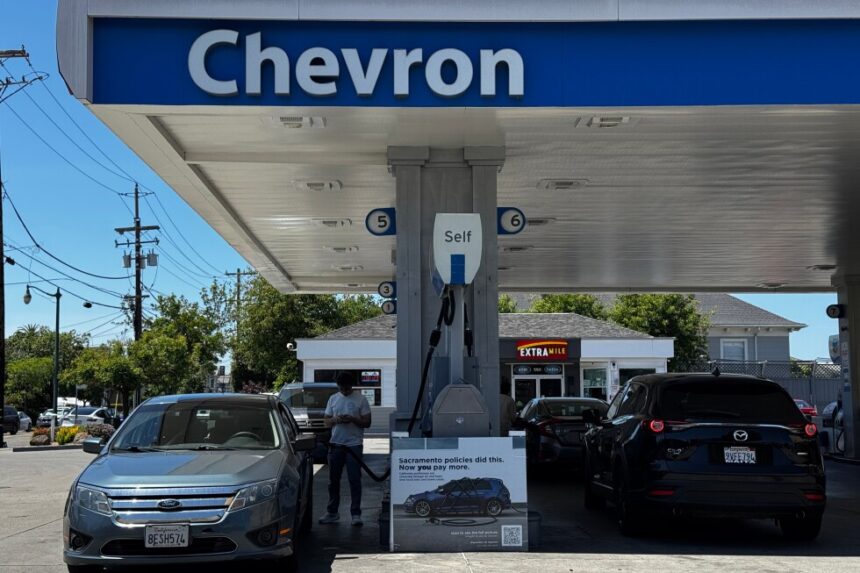
In response, Chevron has positioned itself against California’s climate policies as a prime factor in the escalating gas prices, with signs at their stations asserting, “California politicians are choosing foreign oil and fuels over local jobs and lower costs.” These signs include a QR code leading to a Chevron webpage encouraging consumers to advocate for affordable energy solutions.
Chevron spokesman Ross Allen indicated that this messaging campaign has been in place for three years, aimed at educating consumers about the impact of state policies on fuel pricing. He emphasized that many Chevron stations operate independently and set their own prices, complicating the narrative around price-setting.
The tension between Newsom and Chevron has ramifications that extend beyond consumer prices, influencing the ongoing governor’s race in California. Prominent billionaire climate activist Tom Steyer has publicly criticized former federal health secretary Xavier Becerra for accepting campaign contributions from Chevron, illuminating deeper political dynamics at play.
Amidst the backdrop of global events, including the Iran war, the price of crude oil has risen sharply, impacting gas prices across the nation. The Strait of Hormuz, a crucial passage for global oil transport, has seen disruptions that further contribute to market instability. Newsom has consistently framed his administration’s efforts around combating rising oil company profits, having introduced legislation aimed at penalizing excessive profits and decreasing gas prices.
While he signed a law in 2023 granting the energy commission the authority to penalize oil companies for excessive profits, actual regulatory actions have faced delays. Additionally, two major oil refineries announced closures, accounting for 18% of California’s refining capacity, reigniting the debate over the economic impact of the state’s stringent climate policies. Further legislation passed in 2024 aimed to ensure fuels’ availability during refinery maintenance periods has also experienced setbacks, complicating the state’s strategy to control prices at the pump.