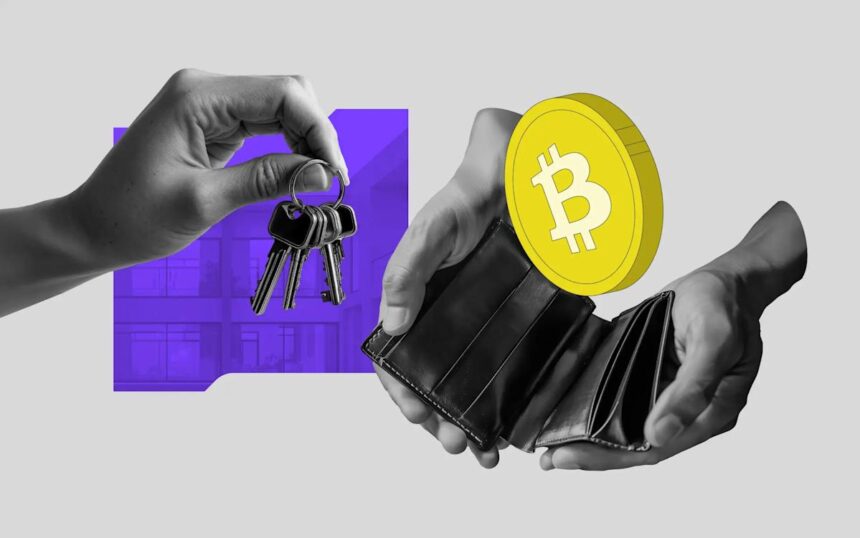
In the current fluctuating landscape of real estate, Bitcoin’s position as a potential currency for purchasing homes has become a point of interest. Currently trading at around $77,261, Bitcoin still falls short of affording a typical family home outright in both the United States and the United Kingdom—a stark contrast to its impressive gains over the past decade.
### Current Housing Market Dynamics
In the United States, median existing-home sale prices remain high, with estimates ranging from approximately $403,200 to $436,500. Wider housing index data suggests average home values hover around $368,000 to $401,000. Under these conditions, a modest starter home, particularly in the Midwest or Southern regions—which typically falls between $250,000 and $350,000—would necessitate around 3.2 to 4.5 BTC. Conversely, acquiring a home at the national median price entails approximately 5.4 BTC, while upper mid-market family homes, ranging from $600,000 to $800,000, could require 7.8 to 10.4 BTC. Luxury properties, on the other hand, generally exceed 15 BTC.
In the UK, house prices exhibit a similar trend, with averages cited at between £268,000 and £290,000. For instance, a typical terraced home priced around £240,000 translates to approximately 4.1 BTC. The average UK home would necessitate about 4.6 BTC, whereas semi-detached homes hover around 4.9 BTC. Detached properties, often priced between £450,000 and £470,000, would require around 5.8 to 6.1 BTC at current rates.
### Barriers to Complete Purchases
Despite its rising value, Bitcoin presents challenges for potential homeowners. Most buyers are unlikely to liquidate an entire Bitcoin due to concerns about capital gains taxes, volatility, and lenders’ preference for traditional income sources. Coupled with transaction fees and stamp duties, the capacity to utilize Bitcoin fully for outright home purchases diminishes significantly. However, it’s noteworthy that one Bitcoin’s value often exceeds typical down payments—generally ranging from 10% to 20% of a home’s cost. Consequently, it holds potential for providing significant equity or a solid down payment particularly in less expensive regions.
### Future Considerations for Bitcoin Appreciation
For Bitcoin to purchase a home outright, substantial growth is necessary, especially if property prices continue to rise moderately. In the U.S., a home priced around $300,000 would necessitate Bitcoin trading at roughly that level—meaning around four times its current price. A median home would require Bitcoin to be valued above $420,000, and luxury properties could demand over $1 million per coin. Similarly, in the UK, a starter home priced at £240,000 would require Bitcoin to reach similar heights, with average and detached homes suggesting prices of £355,000 to £600,000.
While optimistically, projections suggest Bitcoin could reach between $300,000 and $500,000 by 2030, more conservative forecasts cite a slower appreciation, potentially necessitating multiple Bitcoins for desirable properties even in a decade.
### Historical Perspective and Growth Cycles
Over the years, Bitcoin has experienced erratic price fluctuations, characterized by boom-and-bust cycles often correlated with its halving events. From its early days of explosive growth to sharp corrections, Bitcoin has witnessed surges to heights like nearly $70,000 in 2021, only to later descend. Still, each cycle has seen incremental progress, reinforcing its position as a viable asset amid growing institutional interest.
As property prices have doubled in the last 10 to 15 years in both the U.S. and U.K., forecasts suggest modest increases moving forward. In contrast, Bitcoin’s historical growth pattern has outpaced housing inflation, rendering homes cheaper in Bitcoin terms over time.
### The Impact of Tokenization
The regulatory landscape in both the U.S. and U.K. is shifting toward the tokenization of real-world assets, including real estate. This innovative approach could enhance accessibility to property ownership. Tokenization allows for fractional ownership, meaning investors may not need full Bitcoin to purchase entire homes, thereby lowering barriers to entry. Further, it facilitates liquidity with the ability to trade tokens around the clock, offers global participation, and streamlines transaction processes.
As these trends evolve, tokenization could provide a pathway to property ownership even before Bitcoin appreciates enough for outright transactions. In optimistic scenarios, where Bitcoin prices align with the tokenization evolution, average investors may find property ownership increasingly attainable and diverse.
In summary, while Bitcoin’s journey toward purchasing real estate outright faces hurdles, historical trends and emerging technologies signal potential pathways for homeowners and investors alike.