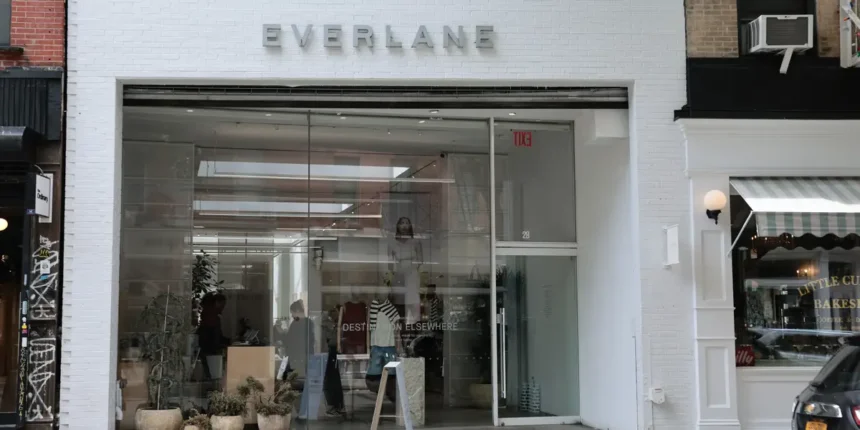
When news broke that fast-fashion giant Shein had reportedly acquired the beloved sustainable brand Everlane, many longtime fans were left in disbelief. Alex Collins, a 35-year-old lawyer from the Midwest, described her reaction to the announcement as akin to an elaborate April Fool’s prank. Having purchased from Everlane for over a decade, Collins is a loyal fan of its minimalist aesthetic, particularly its stylish jackets and pants. In her view, Shein represents a stark contrast, plagued by concerns over labor conditions and environmental impact.
“I’ve never had a good impression of them,” Collins expressed following the initial reports, which were first brought to light by Puck News. The acquisition was officially confirmed shortly thereafter, with Everlane’s CEO Alfred Chang stating in a message that the company would continue to uphold its core values of sustainability and quality as it embarks on this new chapter under Shein’s umbrella. “Everlane will remain an independent brand,” Chang emphasized, indicating a commitment to the brand’s established principles.
Despite these reassurances, current employees were caught off guard by the news, learning about the sale through social media rather than official channels. An internal memo revealed that top leadership would remain intact but acknowledged the difficulty of the week leading up to the announcement.
The acquisition comes at a time when young millennial brands like Everlane are navigating a challenging landscape. These brands, originally built on principles of ethical production and direct consumer sales, are now confronting financial pressures and market realities that compel them to reassess their strategies, including pricing and production methods. Silvia Bellezza, a marketing professor at Columbia Business School, noted the unfortunate trend of sustainable fashion brands being challenged by the need for profitability. “It’s sad because it means that it’s very difficult for brands to really try to put together fashion at reasonable price levels and sustainably,” she remarked.
Everlane has reportedly taken on significant debt, nearing $90 million as of 2022, which has contributed to its decision to seek a buyer. From Shein’s perspective, acquiring Everlane presents an intriguing branding opportunity, potentially allowing Shein to appeal to a more mature audience with Everlane’s existing customer base, which is generally older than Shein’s typical demographic of younger consumers.
The atmosphere at Everlane’s store in downtown Manhattan remained calm despite the upheaval. Minimalist displays and ambient candles created a serene shopping environment, while employees were informed of the situation only when the news became public. For many loyal shoppers, the sense of loss and uncertainty is palpable. Olivia Lobo, a thoughtful consumer and stay-at-home mother from Florida, indicated that she valued Everlane for its ethics and affordability. However, the news of the sale prompted her to reconsider future purchases, leaning instead toward online resale communities to find clothing that aligns with her values.
Retiree Darcy, who recently made a purchase at Everlane, learned about the acquisition but seemed uncertain about its implications for the brand’s quality. “I should have bought them yesterday!” she quipped, expressing her desire to keep an eye on Everlane’s developments moving forward. Similarly, Julia Kupiec, an artist and lawyer, voiced her concerns regarding the potential decline in quality that often accompanies mergers, while Gen Z shopper Farah Naguib felt disheartened by the brand’s association with a fast-fashion giant, voicing her commitment to sustainability.
The acquisition of Everlane by Shein highlights a significant shift in the sustainable fashion landscape, with many consumers left to grapple with the implications of this merger on their shopping habits and brand loyalty.