Concerns about artificial intelligence (AI) are intensifying across the United States, leading to notable backlash even against prominent figures in the tech industry. This rising skepticism became evident when former Google CEO Eric Schmidt addressed graduates at the University of Arizona, asserting that AI’s influence would surpass earlier technological advancements. His statement was met with loud jeers from the audience, signaling a growing discontent that is permeating political landscapes, community discussions, and even law enforcement activities, as reported by the Wall Street Journal.
Recent polls indicate a significant decline in public support for accelerated AI development, particularly among Democrats, while only a handful of technology founders maintain a favorable view. Concerns are varied and numerous, spanning issues of job displacement, educational integrity with instances of cheating, mental health ramifications, and the financial burden of increasing energy costs associated with expanding data centers.
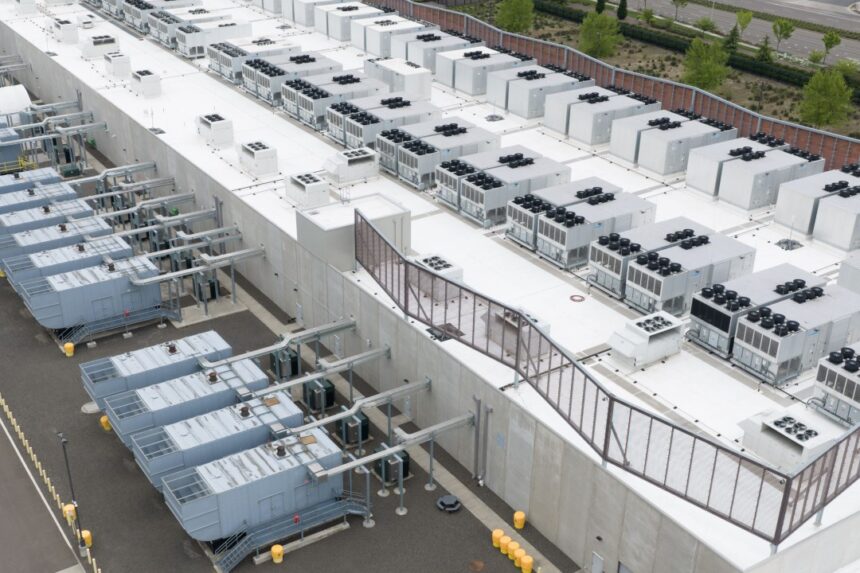
The backlash against these data centers, which Quartz has labeled as “America’s newest political villain,” is manifesting in both digital and physical spaces. Instances of violence have been reported, including an alleged Molotov cocktail attack on the residence of OpenAI’s CEO, Sam Altman, and a shooting incident at the home of an Indianapolis councilman who supported a local data center project, with a note declaring opposition to such developments left in the aftermath. Local political dynamics are shifting as well; in Festus, Missouri, four City Council members were ousted shortly after approving a $6 billion data center investment.
The opposition is growing, with organizers claiming that hundreds of thousands have joined social media groups against such initiatives. Watchdogs have documented numerous data center projects worth over $150 billion that have been delayed or canceled in the past year. In an effort to address concerns over infrastructure strain and the impact on farmers, the Texas agriculture commissioner has called for a halt to new hyperscale data centers. Activism against facilities linked to major tech companies, including Oracle and Elon Musk’s xAI, spans from Michigan to Tennessee, driven by worries over environmental pollution and threats to creative industries. Some critics have even turned to prayer as a means of voicing their opposition to AI expansion.
This climate of apprehension presents an urgent challenge for the tech sector, which has invested billions into expanding computational capabilities. Companies are now responding by channeling substantial funds into midterm elections and attempting to reshape public discourse around AI, highlighting potential tax benefits and advancements. Chris Lehane, OpenAI’s global affairs chief, has pointed to the influence of pessimistic narratives, existing distrust of social media, and persistent negative press as contributors to societal fears surrounding AI. Furthermore, data center executives have acknowledged a growing “disconnect” between their optimistic messaging and the sentiment of the public, a gap that appears to be widening rather than closing as tensions escalate.