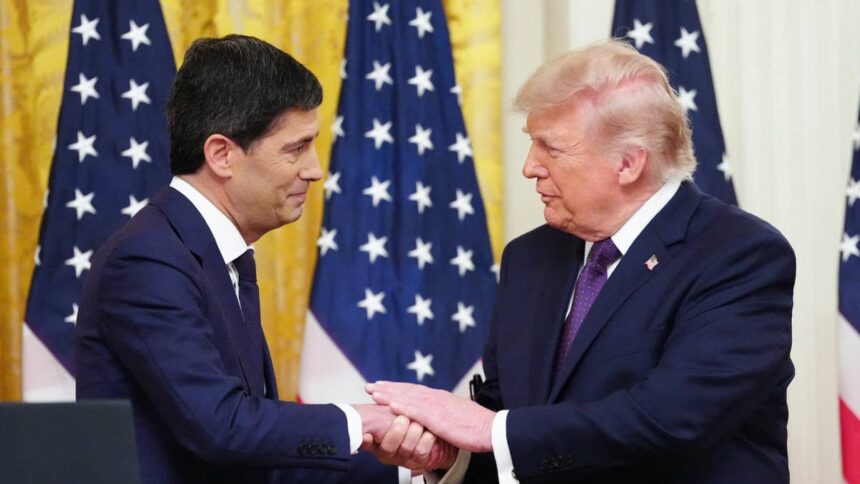
The recent appointment of Kevin Warsh as the Chair of the Federal Reserve has ignited discussions about the future of U.S. monetary policy amid a backdrop of rising inflation and geopolitical tensions. Analysts are cautiously optimistic, suggesting that while Warsh may foster a market-friendly Fed, significant challenges lie ahead.
Since taking office on May 22, coinciding with the Dow achieving a record high, Warsh faces immediate hurdles driven by surging oil prices linked to an ongoing conflict in Iran. Analysts believe that the resolution of this conflict could alleviate inflationary pressures and pave the way for interest rate cuts. Until then, concerns about rising energy prices are prompting many Fed officials, along with Wall Street analysts, to reconsider previous expectations of short-term rate reductions. Instead, there is chatter about potential interest rate hikes by year-end.
The Fed’s recent decisions reflect a shift in policy approach. The Federal Open Market Committee (FOMC) voted to maintain the benchmark Federal Funds Rate at 3.50% to 3.75%, marking a notable pause in its policy-making and highlighting divisions among committee members. The inflation trend is causing a more cautious stance, as indicated by an unusual number of dissenting votes—four, the highest in over 30 years.
Warsh’s appointment emerged from a highly publicized search initiated by President Donald Trump, who had expressed frustration with former Chair Jerome Powell’s monetary policy direction, particularly his reluctance to implement significant rate cuts. Despite these pressures, Warsh has indicated a commitment to Fed independence, emphasizing the institution’s need to make decisions based on comprehensive economic data rather than political maneuvering.
As Warsh settles into his role, he faces the dual mandate of maximizing employment while ensuring price stability. Lowering interest rates can stimulate hiring, yet it also poses a risk of escalating inflation. The balance between fostering growth and curbing inflation is delicate, particularly in the current economic climate, where inflationary indicators are rising.
Industry experts have noted that Warsh’s historical preference for lower rates, bolstered by projected efficiencies from advancements such as artificial intelligence, may be hindered by the current inflationary environment. He has acknowledged the complexities surrounding inflation, particularly with external factors like energy prices and tariffs impacting the decision-making process.
Despite initial market reactions that reflect some skepticism regarding Warsh’s future policies, expectations are high for his upcoming FOMC meeting. The CME Group’s FedWatch Tool is currently predicting a significant likelihood that rates will remain unchanged, with some analysts suggesting that December could see an increase in rates.
As Warsh navigates his tenure, the broader economic landscape remains uncertain. The interplay between global conflicts, inflation pressures, and domestic economic indicators will play a critical role in shaping his policy decisions, and investors are closely watching how he will reconcile these challenges while adhering to the Fed’s mandate for maintaining monetary stability.