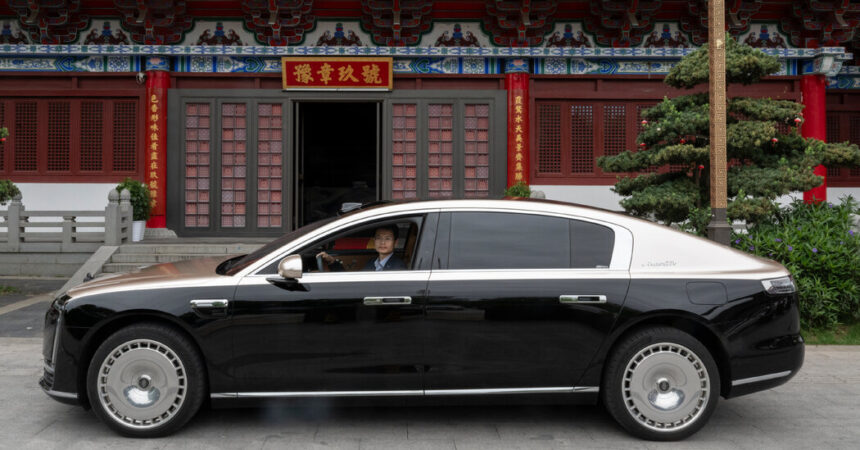
In a remarkable shift within China’s luxury market, consumers are increasingly favoring homegrown brands over traditional Western powerhouses. This trend is personified by individuals like Li Maozai, a law partner in Nanchang, who made headlines by purchasing the Maextro S800, a luxury sedan developed by Huawei and JAC Motors. Priced at $140,000, this Chinese vehicle offers high-tech features and sleek design that Li believes outshine his previous investments in Mercedes-Benz and BMW. “This car changed our old belief that only BMW, Benz and Audi are luxury cars,” he stated, indicating a broader cultural transformation in consumer perceptions.
The Maextro has seen staggering sales success, emerging as China’s best-selling luxury car. Reports reveal that one in three luxury cars sold in China during April was a Maextro, marking a significant triumph for Chinese automotive manufacturing. While the nation faces economic challenges, including a property crisis, domestic shoppers are gravitating towards affording luxury options that resonate with local culture and preferences. This phenomenon is enhanced by a growing sense of nationalism and pride in China’s economic achievements.
Huawei is set to expand its presence in the luxury car market with a new model, expected to launch at a starting price of $220,000. This is not an isolated instance; other Chinese brands are also experiencing impressive growth. For instance, Laopu Gold, a jewelry brand that integrates traditional Eastern craftsmanship, tripled its revenue last year, demonstrating a resurgence in consumer interest in locally produced luxury goods. Meanwhile, homegrown leather handbag labels like Songmont and Truuzen are making their mark by offering premium quality at more accessible price points.
This shift has left established international luxury brands struggling. Richemont, the parent company of Cartier and Van Cleef & Arpels, reported a 23 percent decline in sales in China last year, and Porsche plans to close nearly half of its dealerships in the region. David He, a managing partner at BA Capital, noted the changing dynamics, stating that Chinese consumers are moving away from Western influences and beginning to embrace their own cultural identity.
Li’s enthusiasm for his Maextro extends beyond mere admiration; he actively engages with the car’s community in his home province by organizing events for fellow owners. His excitement is echoed by the features of his new vehicle, including automated doors, a tea warming storage cabinet, and a sophisticated self-driving system.
Laopu Gold’s rapid ascendancy underscores the interest in fine craftsmanship among younger Chinese consumers juxtaposed with rising gold prices. The brand creates unique pieces that celebrate Eastern aesthetic values, evidenced in popular products like pendants shaped as good luck symbols.
Notably, Bernard Arnault, CEO of LVMH, visited Laopu Gold and Songmont, acknowledging their competitiveness in the luxury sector. Songmont, which markets itself as an affordable luxury brand, outperformed established names like Coach during significant sales events. Truuzen, another emergent brand, reported doubling its sales thanks to a focus on transparency and empowerment through its marketing campaigns.
The luxury service sector is also witnessing transformative shifts as high-net-worth Chinese travelers increasingly seek unique, culturally enriching experiences. A significant percentage now prefer boutique hotels that offer personalized service over global chains. Songtsam, a Tibetan hotel brand, exemplifies this trend with its stunning properties and cultural tours, resulting in a 50 percent revenue increase in 2025.
Overall, the luxury landscape in China is evolving, as consumers demonstrate a newfound confidence in domestic brands. As businesses align closely with local sensibilities, they continue to reshape the dynamics of the luxury market, revealing a shift in focus from Western brands to homegrown options that resonate with a growing wave of national pride and cultural appreciation.