Amid the rising dominance of artificial intelligence (AI) in the stock market, Goldman Sachs has identified several investment opportunities in companies that are not directly related to the AI sector. Despite the recent surge in the S&P 500 and Nasdaq Composite indexes, which have reached multiple record highs this year, analysts have noted the difficulty in pinpointing viable investments outside the tech sphere.
In a report released on May 15, Goldman Sachs’ chief U.S. equity strategist voiced concerns over the trend, stating, “With AI and Momentum moving hand in hand and driving the direction of the S&P 500, many investors have expressed the view that the equity market today is ‘one big trade’ rather than ‘a market of stocks.’” The report encouraged investors to look for stocks with robust fundamentals supported by earnings growth, regardless of whether they benefit from AI advancements.
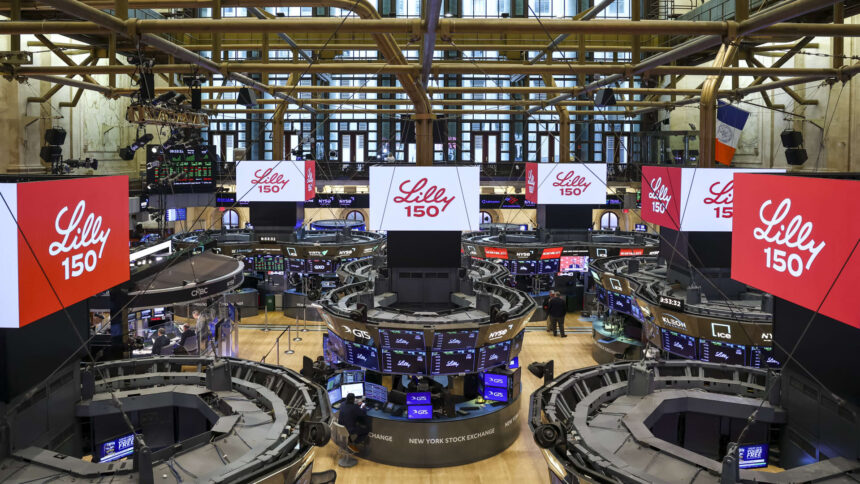
To support this perspective, Goldman highlighted a selection of Russell 1000 stocks that exhibit low price sensitivity to the AI trend and market perceptions of economic growth. Many of these stocks have also experienced positive earnings revisions recently. Among them, Eli Lilly has seen a modest decline of about 1% this year. Analysts at Goldman estimate that only approximately 9% of the company’s recent performance is linked to the broader economic outlook or AI. Morgan Stanley recently reinforced its bullish stance on Lilly, maintaining an overweight rating and setting a price target of $1,344, suggesting a potential upside of 26.2% based on the stock’s closing price on Friday.
In contrast, cybersecurity firm Fortinet has enjoyed a remarkable rise, with its stock up 68.7% this year. Goldman attributes 19% of this growth to the AI narrative and economic conditions. Following a robust first-quarter performance, which exceeded expectations, BTIG analyst Gray Powell upgraded Fortinet’s stock to buy. Powell noted a significant revenue beat, which further solidified confidence in the company’s ability to maintain mid-teens revenue growth in the coming years.
Meanwhile, Chewy, a retailer specializing in pet food and supplies, presents a different picture. Goldman assessed that AI and the economic outlook have influenced only 11% of Chewy’s recent stock performance. The company’s shares have fallen by 37% this year, prompting Wolfe Research to designate Chewy as one of its top internet stock picks. Analyst Shweta Khajuria expressed a belief that the current share price reflects excessive downside risks, assigning an outperform rating with a price target of $39—almost double the stock’s Friday closing price of $20.73.
As analysts sift through the market landscape dominated by AI, they continue to advocate for strategic investments in firms that promise strong fundamentals, ensuring that savvy investors can still find opportunities amid the tech frenzy.