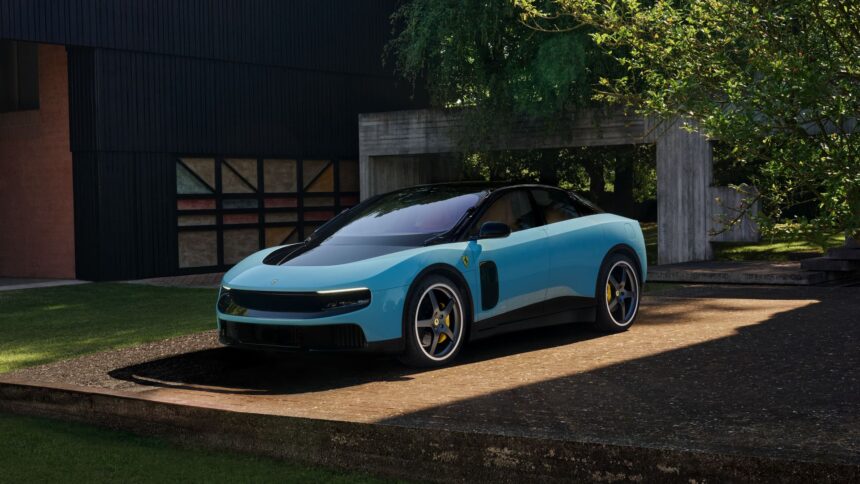
Ferrari has taken a significant step into the electric vehicle market with the recent unveiling of its first fully electric model, the Luce. The launch took place at the Vela di Calatrava in Città dello Sport, Rome, and marks a pivotal moment in the luxury carmaker’s evolution. The name “Luce,” which translates to “light,” reflects the brand’s vision of clarity and direction as it navigates the new landscape of electric vehicles.
Despite the excitement surrounding the launch, Ferrari’s stock faced a sharp decline shortly thereafter, dropping 6.3% on Tuesday morning. This downturn is part of a broader trend, with shares down nearly 27% over the past year. The reaction appears to stem from both market disappointment and apprehensions about Ferrari’s new direction in electrification. Some analysts suggest that the design choices may not resonate with the traditional base of Ferrari enthusiasts who associate the brand with combustion-engine power and classic aesthetic.
Benedetto Vigna, CEO of Ferrari, emphasized the importance of this launch, calling it a “very, very important day” that opens “a new chapter” for the company. Vigna stressed the need to respect both technological advancements and customer expectations, insisting that the new electric model would appeal to both existing clients and attract new customers.
The Luce is Ferrari’s first five-seater vehicle, capable of accelerating from 0 to 60 miles per hour in just 2.5 seconds, with a maximum speed reaching around 192 miles per hour. Priced at approximately 550,000 euros (around $640,000), customer deliveries are set to commence in the fourth quarter of the year. Notably, all components for the Luce have been developed in-house at Ferrari’s Maranello headquarters, while the design was created by LoveFrom, the agency founded by former Apple design chief Jony Ive.
Market analysts have pointed to a mix of factors for the stock’s decline. Concerns about the “design hate” from automotive enthusiasts and the financial implications of transitioning to electric vehicles have fueled skepticism. High research and development costs associated with the new technology have led to fears about potential impacts on profitability and brand integrity. Anthony Dick, an auto analyst, noted that this reaction is “by far the sharpest reaction we’ve seen for a car design,” highlighting the market’s unease with Ferrari’s departure from its traditional ethos.
Vigna assured potential buyers that the Luce would deliver the same driving sensation as conventional Ferrari models, even as it features the distinct sound of an electric engine. He emphasized that the emotional experience of driving remains a core focus for the brand, aiming to keep the legacy alive while embracing innovation.
As Ferrari moves forward with the Luce, the company faces critical questions about how it will balance the expectations of its loyal customer base with the demands of a changing automotive landscape. The coming months will be crucial in determining whether the Luce can successfully carve out a niche in the competitive electric vehicle market.